



Natural Laundry Routine for Athletic Clothing & Kids’ Sports Gear

Athletic clothing and kids’ sports gear can really take a beating. From sweat to bacteria growth and stubborn odors, it can be a challenge to keep everything clean and ready for the next workout or sporting event.
At Branch Basics, we know all there is to know about natural laundry routines that clean deeply without the use of harsh, synthetic chemicals, so your active family stays fresh, clean, and on the go.
In this article, we’ll show you how to care for your athletic clothes and sports gear the human-safe way, from wear to wash, and then wear again!
Key Takeaways
- Synthetic athletic clothing and sports gear trap odors easily
- Implementing a natural laundry routine prevents long-term odors and stains
- Separating laundry by fabric type protects performance and freshness
- Branch Basics Concentrate, Oxygen Boost, and Laundry Detergent are the perfect products to add to your human-safe, natural laundry routine.
Why Athletic Gear Can Develop Odors So Fast
Most activewear is made from moisture-wicking synthetic fabrics like polyester and nylon. These materials are designed to pull sweat away from your skin and absorb it while you work out or play sports.
The downside is that they tend to trap sweat and body oils, creating the perfect environment for odor-causing bacteria to grow.
Another common issue with moisture-wicking athletic clothing and gear is synthetic detergent residues get stuck in the fibers while fabric softeners leave behind a chemical coating that traps sweat, body oils, and detergent, locking odors in.
Speaking of which, we don’t ever recommend using fabric softener in your laundry room.
Learn why in The Toxic Chemicals Hidden in Dryer Sheets & Fabric Softener.
Sports Gear
Shoulder pads, helmets, and other sports gear create dark, warm environments that trap sweat and body oils.
If not cleaned properly, they can develop odors caused by bacteria, mold, and even fungi.
Ensuring Your Washer Is Clean
If your laundry still has a lingering odor after washing, it could be time to clean and detox your washer.
This is especially important if you’re switching from conventional detergents (which can leave behind residue) to a human-safe, natural option like Branch Basics.
Your washer works best when it’s free from synthetic detergent chemicals, fabric softeners, minerals and/or mold and mildew.
Learn more in How To Naturally Clean And Detoxify Your Washer And Dryer
How to Use Branch Basics Concentrate + Oxygen Boost In A Natural Laundry Routine
Keeping your athletic clothes and sports gear clean and fresh doesn’t have to be complicated.
With the help of Branch Basics Concentrate and Oxygen Boost, you can build a simple, effective, natural laundry routine that removes odors, tackles stains, and truly cleans without harmful chemicals.
1. Remove Athletic Clothing & Sports Gear From Gym Bags
After every sporting event or workout, make it a habit to remove everything from your gym bag.
Leaving sweaty clothing and sports equipment in a bag traps moisture and bacteria, which can lead to odors and the growth of mold and mildew, both on the items and inside the bag.
Once emptied, hang the bag up, with all compartments open, in a well-ventilated area so it can dry out.
2. Pre-Treat Odors and Stains
Before tossing everything into the washer, take a moment to check each item for odors or stains, and pre-treat as needed.
For odors, spray underarm area with All Purpose and try soaking the garment for a few hours in a sink filled with warm water and a cup of vinegar.
Sunning is also a great way of eliminating odors naturally. Simply hang the item up in a room near a window, or outside in a sunny spot for several hours and let the sun draw odors out of the fibers.
For stains, removal methods will vary. In The Top 7+ Natural & Reliable Laundry Stain Removers, we break down how to remove tough oil stains, set-in stains, armpit stains, and more.
You can also check out How To Use Our Stain Remover — Available Exclusively at Target.
3. Wash
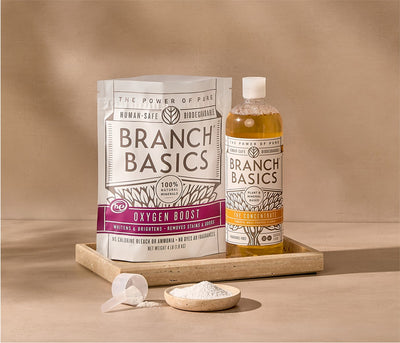
The next step is to wash your athletic clothes and sports gear using Branch Basics Concentrate, diluted to make our Laundry Solution, and Oxygen Boost.
Here’s how to incorporate Branch Basics into your laundry routine:
- Add one scoop of Oxygen Boost to the drum before loading laundry.
- For a Standard Machine, add ¾-1 capful of the Laundry Solution to the washing machine as it fills with water.
- For Front-Loading Machines, pour ¾-1 capful of the Laundry Solution directly into the dispenser drawer.
Add your athletic clothing and/or sports gear and wash as usual.
Alternatively, you can wash using Branch Basics Laundry Detergent.
Just add ¾ scoop directly into the drum before adding laundry. For large or heavily-soiled loads, like gym clothes and sports gear, we recommend adding 1 to 2 scoops.
For more detailed instructions, check out How to Use Branch Basics For Laundry.
And learn more about The Cleaning Power of Branch Basics Concentrate and Oxygen Boost and how you can create a truly clean and human-safe home.
4. Dry
When the wash cycle is complete, remove the laundry and check for remaining stains or odors. If anything lingers, repeat steps 2 and 3 as needed.
Before drying sports gear, always check the label for drying instructions. Some large items like shoulder pads, headgear, etc., may need to be air-dried rather than throwing it in the dryer.
Athletic clothing like yoga pants and sports bras are also best air-dried to help maintain shape and stretch, though most athletic clothing can be moved to the dryer.
Note: Always ensure all clothing and gear are completely dry before storing them away. Trapped moisture can lead to bacterial growth, which causes odors, mold, and mildew.
5. Establishing A Routine
For busy soccer moms and avid gym-goers, establishing a laundry routine can be a lifesaver!
Just getting into the habit of emptying the gym bag and washing everything after use will help you keep on top of stains, odors, and (as many call it) “Mount Clothesmore.”
But for larger sports gear like shoulder pads, as long as you’re airing them out after every use, a less frequent wash routine should be just fine.
A good deep clean every 2 to 4 weeks, depending on wear and how much your athlete sweats, should do the job.
Does The Fabric Type Matter?
When it comes to washing athletic clothing, fabric type really does matter. Separating items by material helps protect their shape and stretch.
Cotton
Although it’s not as common as polyester, cotton does appear in some activewear.
Cotton is a natural fiber, so it’s heavier and should be washed and dried separately from synthetic fabrics.
Here’s what you need to know about cotton:
-
It’s a super absorber: Cotton absorbs everything from water to oils and everything in between. That’s why you shouldn’t wash it with other fabrics, since it can soak up residues and buildup released from other fibers, like polyester.
-
Cotton sheds lint: This lint sticks to synthetic garments and can be difficult to remove.
- Avoid using heat: Over time, high heat, especially in the dryer, can cause cotton clothing to shrink.
To wash and dry cotton activewear, follow these suggestions:
- Separate cotton from all other fabric types.
- Cool or warm water is fine, but never wash cotton in hot water.
- Use a residue- and fragrance-free detergent, like Branch Basics Laundry Detergent or our Laundry Solution.
- Avoid fabric softeners and dryer sheets (Wool Dryer Balls are a great alternative!).
- Air dry or tumble dry on medium or low heat.
Polyester and Nylon
We recommend natural fiber activewear as the most healthy option.
However the most common and popular activewear fabric is synthetic polyester and nylon. They’re both durable and often possess moisture-wicking designs that trap sweat, body oils, and detergent residue. Because of this, it’s important to wash and dry them separately from other fabrics.
Here are a few things you should know about polyester and nylon:
-
They trap sweat, body oils, and detergent residue. These fabric types are “hydrophobic,” which means they repel water but attract and hold onto sweat, body oils, bacteria, and detergent residues.
- Heat is a no-no. Heat can lock in odors, making smells even stronger and harder to remove.
To wash and dry polyester and nylon, consider the following:
- Separate from other fabric types, especially cotton.
- Use cool water (never hot).
- Use a residue- and fragrance-free detergent, like Branch Basics Laundry Detergent or our Laundry Solution.
- Avoid fabric softeners and dryer sheets.
- Air dry or tumble dry on a very low heat setting.
Spandex Blends
Spandex blends need a little extra care while washing and drying to preserve stretch and prevent odor buildup.
A few things to note about spandex blends:
-
Avoid using heat. Spandex is very sensitive to heat. Hot water and high dryer heat can weaken the elastic stretch, causing the garment to lose its shape over time.
- Spandex traps oils. Just like polyester and nylon fabrics, spandex traps oils and detergent buildup, so it's best to avoid using conventional detergents and fabric softeners.
To wash and dry spandex blend activewear, consider the following:
- Wash in cool water (never hot) with similar fabrics.
- Use a residue- and fragrance-free detergent, like Branch Basics Laundry Detergent or our Laundry Solution.
- Avoid fabric softeners and dryer sheets.
- Air dry or tumble dry on a very low heat setting.
Toss The Toxins with Branch Basics
If you haven’t already, we hope this article has inspired you to start a natural laundry routine, especially if you’re washing athletic clothes and sports gear.
By doing so, you’ll keep stains and odors at bay while preserving the integrity of your activewear.
Incorporate Branch Basics into your routine, and you’ll be creating a much healthier, safer laundry room and home.
To get started with Branch Basics, check out our Premium Starter Kits (available in glass or plastic).
We’ve created a simple system that allows you to clean your home and wash your clothes with just one Concentrate, water, and five reusable bottles.
Each kit comes with everything you need to make All-Purpose, Bathroom, Streak-Free, Laundry, and Foaming Wash. You’ll also receive a full-size bag of Oxygen Boost.
Our products are Made Safe Certified, EWG-verified, never tested on animals, and are made from natural plants and minerals. Branch Basics Concentrate is also third-party tested as a non-skin or eye irritant.
To learn more about human-safe living and cleaning, be sure to visit our Wellness Center, check out our Cleaning Tips & Tricks, and take our no-cost Toss the Toxins Course.
The course is built on decades of experience helping clients remove products that hijack health, the ability to heal, and limit our potential. It is a simple, efficient category-by-category process that immediately takes a load off the immune system.
We invite you to strengthen your family’s resistance to illness with this proven way to boost immunity. It is a powerful preventive healthcare measure!
FAQs
Q: How do I wash athletic clothing so they don’t hold odor?
A: Athletic clothing, especially items made from polyester, holds odor because the fibers trap sweat, detergent, and fabric softener residue. The key is to remove and prevent buildup.
The best way to do this is to wash athletic clothes promptly using a human-safe, natural laundry detergent like Branch Basics Laundry Detergent or Laundry Solution, avoid fabric softeners, and dry promptly.
Q: Should I air-dry workout clothes or put them in the dryer?
A: It depends on the fabric and how the garment is made.
Most workout clothes are safe to put in the dryer on low or medium heat, but items like yoga pants and sports bras (clothing with stretch and/or spandex waistbands) should be air-dried to maintain their shape and stretch.
Q: How can I prevent kids’ sports uniforms from smelling up the hamper?
A: The best course of action is to separate stinky sports uniforms from other laundry piles.
To prevent lingering odors, act quickly! Pre-treat stains and wash promptly.
Categories

Marilee Nelson
Marilee Nelson is an Environmental Toxins expert who has spent nearly 30 years advocating for the chemically-sensitive and chronically-ill. She is a Board Certified Nutritionist, Certified Bau-Biologist and Bau-Biology Inspector and specializes in Food As Medicine. She has helped thousands of families and individuals identify, heal and recover from toxic exposures and is on a mission to revolutionize the way American families view their health.


