

How To Avoid Microplastics In Your Food & Water And Pollute Less At Home

We are so thrilled that the NIH and EPA are finally planning to study and eventually address the microplastic pollution issue.
This isn’t a political stance, but a serious and persistent health issue that affects every single living being on this planet.
Plastics contain a variety of endocrine-disrupting chemicals, like bisphenols and phthalates, linked to various serious health issues, including fertility issues, hormone-driven disorders, certain cancers, metabolic syndrome, neurological impairment, developmental issues in unborn babies, and heart disease, to name but a few.
But this article isn’t about fear-mongering; it’s about how to protect yourself and your family from ingesting excess microplastics in your food and water.
No, we can’t avoid ingesting microplastics; they’re literally raining down from the sky. The good news is, there are dozens of ways to significantly reduce your exposure and lessen the risk of microplastic-related issues.
It’s time to toss the microplastic toxins and reduce our microplastic footprint!
Fast Facts About The World’s Microplastic Problem
If you’re reading this article, chances are you already know about microplastics and why we should avoid them, so we won’t spend too much time here.
However, here are a few fast facts to get you motivated to toss these pesky toxins from your home:[1-8]
- Microplastics are tiny fragments of plastic the size of a hair or smaller, found in our soil, air, food, water, and bodies.
- They can enter the body through ingestion, inhalation, and through the skin.
- Research has shown that indoor air can contain up to 28 times more microplastic pollution than outdoor air, mostly from plastic-based household products & building materials (think synthetic carpets, couches, floors, toys, etc.).
- The average person consumes about a credit card’s worth of microplastics per month.
- Microplastics are a problem because they contain endocrine-disrupting chemicals such as bisphenols, (BPA, BPB, BPF, BPS, etc.), phthalates, and forever chemicals (PFAS), which wreak havoc on the hormonal system.
- They’ve also been linked to a potential threat to cardiovascular health, as they may build up in the arteries and the vascular system.
- Not all water filters are rated to capture and remove microplastics.
- Microplastics have been found in bottled water, including spring water.
- Microplastics can be absorbed through the skin from water or plastic-based clothing.
- Microplastics can come from obvious sources, like food containers and single-use plastics, but also are used in skincare, cleaning, and laundry products!
- Research suggests that fertilizers are a significant source of agricultural microplastic pollution.
- Industrial agriculture practices, such as using plastic tarps, create microplastic pollution in soil that ends up in our food.
- Microplastics bind to pesticides, amplifying their negative impacts on ecological systems.
- Microplastics are hurting our oceans, fish, sea creatures, and wildlife through their ingestion and their negative impacts on the food chain.
We could go on and on, but we hope these facts help you see how important it is to reduce microplastic exposure and our microplastic footprints at home.
Time To Toss The Toxins! 25 Practical Ways To Avoid Microplastics In Your Food & Water
We want this information to empower you to take practical steps to reduce microplastic exposure at home.
Whether you’re able to implement one or two or all 25 suggestions, you can rest easier knowing you’ve taken powerful steps to safeguard your health, and that of the environment, against microplastic pollution.
In the interest of time, we’re keeping these descriptions brief with links for more information and resources.
Now, let’s get started tossing those microplastic toxins for good!
1: Swap Plastic Storage Containers For Glass
This is one of the best ways to reduce microplastic exposure and support hormonal health.
And it doesn’t have to cost a lot.
Start by swapping out old plastic storage containers for inexpensive alternatives like mason jars or affordable glass containers. You can even find these super cheap at thrift stores, and they work great.
Save money and reuse glass jars from products you have purchased and used up.
Food can also be stored in glass casserole dishes and crockery.
Get more tips in: Switching to Glass: The Best Way to Store Food & Drinks to Avoid Phthalate and BPA Exposure.
2: Avoid Buying Food & Beverages Packaged In Plastic As Much As Possible
This is a no-brainer, but easier said than done.
- Some helpful tips include:
- Buy loose versus packaged produce
- Bring your own produce bags
- Focus on the perimeter of the grocery store
- Shop the farmer’s market for things like milk in glass
- Choose eggs in paper cartons
- Cook from scratch as much as possible
We know groceries are expensive, and perfection is not the goal. Just do what you can to become more conscious of avoiding plastic packaging whenever possible.
3: Remove Food Or Produce From Plastic Packaging When You Get Home
When you do buy food in plastic (and we ALL do!), like packaged produce or grains, remove it from the packaging when you get home, and store in glass or a safer container.
Get helpful food storage tips in: How to Keep Produce Fresh Longer [Complete Guide]
4. Don’t Heat Or Microwave Food In Plastic
We’re not fans of microwaving for health reasons, and definitely not fans of microwaving or heating anything in plastic.
Heat quickly breaks down plastics, releasing all those toxic chemicals directly into your food!
If you like buying some premade foods, at the very least, take them out of the containers and heat them on the stovetop. And keep in mind, even non-plastic-looking packaging likely contains a non-stick coating made with plastic chemicals, like PFAS.
5: Avoid Plastic Kettles Or Kettles With Plastic On The Inside
Heat degrades plastic, even heavy-duty plastic, making plastic kettles a big no-no.
However, even stainless-steel and glass kettles may have plastic parts on the inside, so be sure to investigate thoroughly before purchasing.
We like either electric glass kettles or glass stovetop kettles.
6: Switch To Glass Or Stainless Steel Water Bottles
Glass is our first pick, because it’s inert and totally free from harmful chemicals. However, high-quality, lead-free stainless steel is a close second.
Get all our recommendations in: How To Choose Safe Water Bottles & Our Favorite Brands
7. Switch To Non-Toxic Skincare Products
Warning! Skin and body care products may contain microplastics, plastic chemicals, and silicone/siloxanes.
These are often used in exfoliating products as microbeads, and in shampoos and conditioners to help create a silky smooth feel. And phthalates are very common in fragrances.
You can avoid this completely by switching to non-toxic, fragrance-free personal care products.
Get more guidance in: Our Favorite Non-Toxic Personal Care Products
8: Avoid Tea In Shiny Teabags
As discussed in 8 Ways To Consume Less Plastic, designer shiny teabags can release millions of microplastics into your healthy herbal or green tea!
To avoid this, opt for plastic-free teabags or loose-leaf tea.
9. Skip Coffee Pods
Coffee pods are a leading cause of microplastic pollution in the environment and in the humans who use them!
Hot water poured over flimsy plastic equals a microplastic convention in your coffee cup.
The simplest solution is to go with French Press, pour-over, or traditionally brewed coffee, which brings us to our next point.
10: Check Out Allison’s Clean, Plastic-Free Coffee Routine
Most coffee makers also pollute your coffee with microplastics from tubing, plastic filters, and coffee pot lids.
Our co-founder, Allison Evans, shares how she avoids this and creates a healthy, plastic- and low-tox morning brew in: Clean Coffee + Allison’s Routine.
11. Take The Lid Off Your Disposable Or Reusable Coffee Cup
Most coffee cup lids are plastic, and when hot liquid flows over plastic, it releases microplastics.
The solution: take off the lid when you’re ready to sip! This applies to disposable and reusable coffee cups (and yes, opt for reusable as much as possible because most disposables have plastic chemicals lining the cups).
12. Use Straws? Try Stainless Steel, Glass, Or Silicone
Straws aren’t great for the environment for so many reasons, which is why we use reusable stainless steel, glass, or silicone straws at home.
Yes, they’re a bit of a pain to clean, but they typically come with a cleaning brush, and it just takes a few minutes to reduce microplastic exposure and environmental harm.
Busy mom tip: Let the kids clean their own reusable straws! For some reason, they find it fun, and the older ones like knowing they’re helping sea creatures.
13. Opt For Natural Fiber Clothing Whenever Possible
As mentioned in the Fast Facts, studies suggest we can absorb microplastics through the skin from synthetic, plastic-based fabrics, such as polyester.
Opting for natural fiber clothing also helps keep trillions of microplastics from being released in the washing machine with every wash.
Related reading: How To Choose Healthy Sustainable Clothing
14. Skip PFAS-Based Period Panties & Plastic Feminine Care Products
We love eco-friendly period products, but draw the line at PFAS-based period panties and plastic-containing pads, tampons, and applicators.
Seriously, these are going into or sitting so close to some of your most absorbent and vulnerable tissues, including reproductive organs. That’s not where you want to be depositing hormone-disruptive plastic chemicals!
We wrote all about this in Natural Feminine Care 101: Toss The Toxins For A Happier, Healthier Period.
So have a read-through and do your own research for a healthier, plastic-free period.
15. Filter Your Water With A Microplastic-Rated Filtration System Or Buy Bottled
Drinking water has become a significant source of microplastics, making filtration a necessity.
However, your standard cheap water filter is not going to be rated for 0.3 microns or lower, the size of most microplastics.
Learn all about our favorite water filters that take out microplastics, pharmaceuticals, and more in: How To Choose The Best Water Filter For Every Home And Budget.
16. Use Glass Bottles For Babies & Toddlers
Babies’ and toddlers’ immature organs and systems are more susceptible to toxins than adults’, which is why we must help reduce their exposure.
For this, we recommend only glass baby bottles for breastmilk, formula, and baby food. They’re not as expensive as they used to be, and you can usually find them second-hand.
Another great way to avoid microplastics in baby food prep and storage is to practice baby-led weaning, which we discuss in: Our Take On Homemade Baby Food And BLW.
17. Avoid Essential Oil-Based Cleaning Products Stored In Plastic
It is well-known that essential oils quickly break down plastics, which is why they’re almost always stored in glass bottles.
However, many essential oil-based cleaners are stored in plastic, which means you’re likely spraying out microplastics with every squirt.
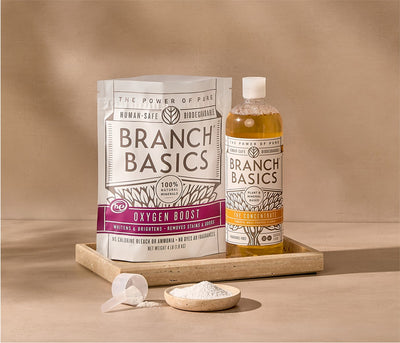
Instead, opt for naturally fragrance-free cleaners, like Branch Basics.
18. Ditch & Switch Teflon & Its Cousins For Healthier Cookware
Teflon and its non-stick cousins are among the worst and most sneaky sources of forever plastic chemicals known as PFAS.
We share two approaches to this:
-
Our Take On The Safest Non-Toxic Cookware
-
Have Nonstick Cookware? What To Do Until You Can Replace It
19. Chew Natural Gum
Would you believe many brands of chewing gum use plastics, like polyvinyl acetate, in their gum base?!
Although we don’t recommend eating sugar as a habit or products with natural flavors, if you like chewing gum, opt for plastic-free, more natural brands, like PUR and Spry.
20. Switch To Human-Safe, Plant- And Mineral-Based Cleaners
As mentioned previously, cleaning products can be a hotbed of microplastics and plastic-based chemicals, including microbead scrubbing agents, endocrine-disrupting fragrance chemicals such as phthalates, and microplastics from packaging.
You can avoid a lot of this by switching to a plant- and mineral-based cleaner, like Branch Basics, which never uses plastic or petroleum-based chemicals or fragrances (natural or artificial).
Our products are also free from essential oils, which, as discussed previously, degrade plastic packaging over time.
Shop Branch Basics refillable Starter Kits in Glass.
21. Opt For Non-Plastic Toys As Much As Possible
This can be really hard, but do your best to fill your child’s world with toys made from natural materials, like wood, hemp, rubber, latex, and bamboo.
This keeps plastic pollutants out of their hands and mouths, while reducing waste and microplastics in your home environment.
Related: Our Favorite Non-Toxic Baby Toys for Development & Growth
22. Swap Dryer Sheets & Plastic Dryer Balls For Natural Wool
Dryer sheets are chock-full of harmful and flammable (!) chemicals and release a boatload of microplastics onto your clothes and into the air.
Plastic dryer balls are better, but they still break down in the dryer's heat, adding to the microplastic load.
Instead, opt for natural wool dryer balls to remove static, reduce drying time, soften clothes, grab hair, and more.
Shop Branch Basics 100% Wool Dryer Balls from sustainably raised sheep.
23. Go For 100% Rubber Pacifiers
Parents can now get 100% natural rubber pacifiers for their babies!!
Yes, most pacifiers are made from silicone, which is safer than plastic, but the handles are made from plastic, which often go into babies’ mouths.
Allison and Kelly like Natursutten, Bibs, or Ninni brands.
24: Filter Your Air Indoors
An air purifier is one of your best friends for reducing indoor air pollutants, including microplastics.
But, it has to be rated for 0.3 microns and free from plastic in the filter.
Our favorites are the metal Austin Air filters. Note: Even air purifiers made of ABS contribute to the microplastic issue.
P.S. Be sure to change your air filters in your vents regularly, too! We like Filtrete filters.
25. HEPA Vacuum Regularly
HEPA vacuums and filters are designed to capture 99.97% of airborne particles measuring 0.3 microns, the size of most microplastics.
Although they used to be very expensive, there are now many affordable options.
Learn more in: The HEPA Vacuum for Non-Toxic Living: Improve Indoor Air Quality
Extra Tips For Reducing Your Microplastic Footprint
Since what’s good for us is good for the environment, implementing the tips above will automatically reduce your microplastic footprint.
If you’d like to do more (which we encourage), here are some extra tips.
1: Skip Laundry & Dish Detergent Pods
Instead, choose liquid or powdered, human-safe laundry detergent and plastic-free dishwasher tablets.
Great news, we’ve got both!
- Shop Branch Basics Laundry Detergent (powder)
- Shop Branch Basics Laundry Kit
-
Shop Branch Basics Plastic-free Dishwasher Tablets
2: Avoid Single-Use Plastics
‘Nuff said!
3: Use A Guppy Bag When Washing Synthetic Clothing
The Guppy Friend Bag is a must-have for reducing microplastic pollution from laundry.
4. Take Care Of Your Tires!
Tires release a lot of microplastics into the environment. You can reduce this by keeping tire pressure optimal, driving defensively, and keeping up with regular car maintenance.
5. Invest In Plastic-Free Tools
If and when you can, pay a little extra for a plastic-free shovel, hoe, or other gardening or maintenance tools.
6. Buy Natural Art Supplies (and skip the glitter!)
This isn’t always easy, but do your best to avoid microplastic-stuffed art supplies, like glitter, Perler beads, acrylic paints, and single-use paints.
There’s a lot more to say about this, but that’s a good start.
Let Branch Basics Help You Create A Lower Microplastic Footprint
Branch Basics all-in-one, refillable cleaning and laundry line is a 100% microplastic-free formula that’s EWG-verified, MADE SAFE certified, Leaping Bunny Certified, and completely free from harsh chemicals and fragrance.
Our products are designed for the most sensitive individuals, including those with chemical sensitivities, babies, people with chronic illness, and older people, and they’re economical and refillable too.
For the ultimate low-plastic solution, we recommend our Starter Kits in refillable glass, including:
- The Premium Starter Kit: Our original all-in-one kit comes with our signature Concentrate, refillable glass bottles, and Oxygen Boost
- The Ultimate Starter Kit: Our newest all-in-one plus kit comes with our signature Concentrate, refillable glass bottles, and Oxygen Boost, plus our water-free Laundry Detergent (so your Concentrate lasts longer) and our plastic-free Dishwasher Tablets.
- The Cleaning Essentials Starter Kit: Perfect for those who already have a human-safe laundry detergent and hand soap they like, this includes everything you need to make multiple refillable glass bottles of All-Purpose, Bathroom, and Streak-Free.
If this has inspired you to remove more harmful chemicals from your home, check out our free Toss The Toxins Online Course, your step-by-step guide to identifying, removing, and replacing harmful products from your home.
References:
- https://www.unep.org/news-and-stories/story/everything-you-should-know-about-microplastics
-
https://www.sciencedaily.com/releases/2024/04/240419131901.htm
-
https://www.sciencedirect.com/science/article/pii/S2213343722002329
-
https://pmc.ncbi.nlm.nih.gov/articles/PMC12848325/
-
https://www.science.org/doi/10.1126/science.adl2746
-
https://magazine.hms.harvard.edu/articles/microplastics-everywhere
-
https://pmc.ncbi.nlm.nih.gov/articles/PMC12244789/
-
https://www.nature.com/articles/s43247-023-01172-y
- https://www.ijnrd.org/papers/IJNRD2506274.pdf

Marilee Nelson
Marilee Nelson is an Environmental Toxins expert who has spent nearly 30 years advocating for the chemically-sensitive and chronically-ill. She is a Board Certified Nutritionist, Certified Bau-Biologist and Bau-Biology Inspector and specializes in Food As Medicine. She has helped thousands of families and individuals identify, heal and recover from toxic exposures and is on a mission to revolutionize the way American families view their health.