

What Are The Main Causes Of Indoor Air Pollution?

Environmental air pollution is a widely recognized problem that everyone wishes we could fix.
Yet, few people stop to consider the air quality in their own homes, which, according to the EPA, is 2-5 times worse than outdoor air pollution and can cause or contribute to many illnesses.[1]
This is compounded by the fact that the average American spends about 90% of their life indoors, breathing that contaminated air all day and night long.[2]
The good news is we have tremendous control over the air quality in our homes.
The first step to improving indoor air quality is to know the causes of indoor air pollution, which is what this article is all about.
Here, you’ll learn some of the most common causes of indoor air pollution and how to eliminate or reduce those sources to create a much healthier home.
What Are Indoor Air Pollutants?
There are over 80,000 chemicals in production worldwide, and many of them find their way — directly or indirectly — into our homes.[3]
Although it would be impossible to list all the potential chemicals and pollutants floating around the average American home, here are some of the most common and concerning:
- VOCs: Volatile organic compounds are aromatic compounds in natural and synthetic materials, as well as cleaning and personal care products, that cause sick building syndrome.
- SVOCs: Odorless semi-volatile organic compounds that linger on dust long after VOCs have off-gassed. Examples of SVOCs include phthalates, biocides, flame retardants, and PFAS chemicals.
- Plastic chemicals: Such as BPA, BPB, BPS, vinyl chloride, and others.
- Microplastics: These ride on dust and come from plastic products.
- Phthalates: Potent endocrine-disrupting compounds found in fragrance, plastics, and building materials.
- Dust mites: Come from dust, bedding, carpets, rugs, surfaces, etc., and are not a problem unless allowed to build up.
- PFAS: Aka: “forever chemicals” come from non-stick cookware, bakeware, stain-resistant carpets and furniture, waterproof fabrics, cleaning products, shoes, and more.
- Particulate: Including that from smoke, dust, outdoor air pollution, combustion, candles, gas stoves, etc.
- Smoke: From cigarettes, fireplaces, candles, and woodburning stoves
- Heavy metals: These ride on dust and get tracked in on shoes and are found in various products.
- Asbestos: This is found in older homes built with asbestos-containing materials, such as drywall or popcorn ceilings.
- Flame Retardants: Used in building materials, rugs, and furniture
- Formaldehyde: A common preservative used in furniture, carpets, rugs, cleaning, and personal care products.
- Dioxanes: Carcinogenic chemicals that occur in synthetic chemical detergents, such as laundry detergent, and are used in the production of vinyl products.
- Nitrogen dioxide: From gas ranges, ovens, and fireplaces.
- Carbon monoxide: From combustion appliances.
- Mold and mycotoxins: From water damage and dampness.Pet dander: From our furry friends.
Again, this is not a complete list of indoor air pollutants but highlights some of the most common.
Click the links above for more information on these pollutants
So, where do all these pesky pollutants come from?
Here are seven of the leading causes of indoor air pollution in the average American home.
1. Combustion Sources
Combustion sources include gas stoves/cooktops and fireplaces, wood-burning fireplaces and stoves, HVAC systems, boilers, and vehicles—mainly if run in an attached garage.
These appliances emit carbon monoxide and nitrogen dioxide, both of which can cause acute and long-term symptoms, including respiratory ailments, headaches, nausea, neurological damage, allergies, and even death.
Solutions:
- Install carbon monoxide detectors and replace batteries once or twice annually.
- Hire a professional to assess and ensure your combustion appliances are properly vented and in working order.
- Always make sure your cooktop hood or vent is vented outdoors and not indoors!
- Hoods for gas cooktops should be carefully vetted and installed by a professional to ensure adequate ventilation (many cooktop vents are not efficient enough for gas stoves).
- If a puff of smoke comes down the chimney, open the windows and/or run an air purifier.
- Open the garage before you start the car, back out quickly, and never run the car in an open garage or back into the garage.
- If you notice the smell of exhaust in the room attached to the garage after someone leaves, open the windows immediately.
2. Cleaning And Personal Care Products
The products we bring into our homes, especially cleaning products, can have a profound impact on indoor air quality.
For example, studies have shown indoor air pollutants like VOCs and SVOCs can increase by 60-80% after cleaning![4]
That’s because conventional cleaning products, including laundry products, contain a toxic soup of synthetic chemicals, like chlorine bleach, ammonia, formaldehyde, fragrance, 1-4 dioxane, and others, which linger in the air and on surfaces, both when we use them and when they’re stored away in cabinets.
Think about the last time you walked down the laundry or cleaning aisle in the supermarket and could smell the scent of all those closed and sealed cleaning products.
This is why the EPA lists cleaning products among the top sources of indoor air pollution.[1]
Personal care products, including shampoo, conditioners, perfumes, soaps, hairsprays, spray deodorants, and baby products, also contribute to indoor air pollution, especially if they contain synthetic fragrances and are sprayed.
Solutions:
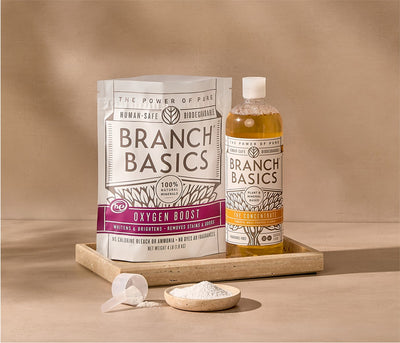
- Switch to human-safe, plant- and mineral-based, 100% biodegradable, and naturally fragrance-free cleaning products, laundry products, and dish detergents (like Branch Basics).
- Start switching over to natural, non-toxic personal care products that are naturally fragrance-free.
- Use EWG’s SkinDeep to vet cleaning and personal care products, choosing only those that are rated “1-2”.
- Detoxify your washer and dryer.
- Check out Branch Basics Free Online Course: Toss The Toxins, which walks you through all of this, step-by-step.
Related reading: 3 Tools You Need To Become Your Own Product Advocate
3. Fragranced Products
Fragranced products, including air fresheners (sprays and plug-ins), scented candles, incense, laundry products, and even natural fragrance, are one of the most misunderstood sources of toxic air pollution in the home.
These scents are made up of dozens to hundreds of undisclosed chemicals, many of which have never been tested for safety and/or are suspected or known to be toxic to the endocrine, respiratory, immune, and neurological systems, among others.
One of the most-studied and common ingredients in fragrances is phthalates, a type of plasticizer, SVOC, and potent endocrine disruptor linked to autoimmunity, asthma, obesity, neurodegenerative conditions, congenital disabilities, hormonal-driven cancers and diseases, and reproductive developmental issues, especially in boys.[5-8]
This is why we recommend removing synthetic fragrance as a first line of defense in our Toss The Toxins Course; it’s that critical to restoring your home’s air quality.
Solution:
Go fragrance-free and use these resources to help
-
Branch Basics Free Online Course: Toss The Toxins
-
How To Remove Synthetic Fragrance From Your Home
-
The Best Natural And Fragrance-Free Laundry Detergents
4. Furniture & Building Materials
Furniture and building materials are a well-known source of various indoor air pollutants, including:
- Plasticizer chemicals
- Formaldehyde
- Various particulates
- VOCs
- Vinyl-based chemicals
- SVOCs
- Phthalates
- Heavy metals
- Forever chemicals, including PFOAs and PFOS
- PBDEs (used in flame retardants)
This is the category most of us have the least control over, unless you can afford to build a brand-new, completely low-tox home.
However, the good news is you can take steps to drastically reduce exposure by being choosy about the new furnishings and building materials you use and bring into your home, as well as using the power of off-gassing to reduce VOCs and other chemicals in new household purchases.
Learn more in:
- Tools To Help You Vet Furniture
- The Non-Toxic, Sustainable Building Materials I Used in My Home Renovation
-
How To Choose The Safest & Healthiest Mattress
5. Moisture And Biological Sources
Moisture, such as dampness in basements, crawl spaces, attics, appliances, baths and showers, HVAC systems, under carpets, and under sinks, leads to mold, one of the top indoor air pollutants.
Since mold needs moisture and a food source (typically dust and dirt) to grow, your best defense is to address moisture and humidity issues immediately and keep your whole house clean.
A dehumidifier in the basement or a poorly ventilated bathroom that maintains humidity below 50% can make a big difference.
If you suspect a mold problem, it’s usually best to call in a professional to assess the situation rather than risk exposure, which can make you very ill.
For new home buyers, we also highly recommend having the home tested and inspected for mold specifically, as not all home inspectors offer this service (believe us, it can save you thousands of dollars and health issues down the road).
Small mold and mildew problems, like on tile grout or shower curtains, can be treated at home with natural products like Branch Basics, baking soda, and 3% hydrogen peroxide.
Biological sources of indoor air pollution are often linked back to pests.
However, using harsh pesticides will only make things worse. We discuss the best natural pest control methods in The Ultimate Guide To Natural Pesticides And Safer Alternatives.
6. A Lack of Ventilation
Ventilation is your best defense against indoor air pollution and can be as simple as opening your windows twice daily (early morning and evening) to let in fresh air!
This allows old, stale air pollutants to flow out and fresh air to flow in.
Additional tips to improve ventilation include:
- Have your HVAC system serviced regularly.
- Change your air filters once a month (we recommend Filtrete filters).
- Clean your bathroom fans.
- Be sure your cooktop hood is vented outdoors, especially if you have a gas stove.
- Consider adding a home air purification system, such as Austin Air, to help circulate the air and trap more pollutants.
- Dust your ceiling fans and returns weekly.
7. Pesticides
Pesticides are more prevalent in homes than most people realize.
Even if you avoid using them in your yard, things like bleach and ammonia are technically EPA-registered pesticides!
Topical flea and tick treatments are also pesticides, and shoes track in a substantial amount of pesticide residue from lawns, sidewalks, and other public spaces.
Fortunately, this is one of the easiest to remedy by:
- Replacing synthetic pesticides or lawn care services with human-safe alternatives.
- Replacing cleaners with harmful ingredients with low-tox, biodegradable alternatives, like vinegar, baking soda, 3% hydrogen peroxide, liquid castile soap, and Branch Basics.
- Creating a no-shoes indoor policy.
Get more information in: How To Remove Pesticides From Your Home In 8 Simple Steps.
Additional Tips & Tools For Improving Indoor Air Quality
Now that you’ve identified and reduced or removed the most common indoor air pollutants, here are some helpful tips & tools to maintain better air quality.
-
Invest in a HEPA vacuum: These fully sealed systems are the very best tool for improving and maintaining air quality, as they don’t recirculate dust and other toxins as you clean.
- Discover our favorite brands, in: HEPA Vacuum: Indoor Air Pollution’s Worst Enemy (& How to Choose One for Your Home).
-
Maintain appliances: Washers and dishwashers can become sources of mold and mildew if not cleaned and properly maintained. As mentioned previously, HVACs should also be maintained.
- See How To Naturally Clean And Detoxify Your Washer And Dryer and How To Deep Clean Your Dishwasher for more details.
-
Avoid vinyl shower curtains: This may seem like a small thing, but a new vinyl shower curtain in a small, poorly ventilated bathroom can really affect your indoor air quality.
- Learn how to choose a safer shower curtain & liner in: The Best Non-Toxic Shower Curtain Liners
- Wash your walls and ceilings: VOCs and SVOCs tend to settle on surfaces that are rarely cleaned. Aim to deep clean yours once or twice a year to breathe easier.
- Keep your oven and cooktops clean: Cooking can be a significant source of indoor air pollution, especially if food burns. Click the link to learn how to clean them without harsh chemicals.
- Upgrade to safer finishing and furnishing as you’re able: When you’re ready for new flooring, paint, and furniture, use what you’ve learned here to upgrade to safer options, such as hardwood, VOC-free paint (like ECOS), and plastic- and vinyl-free alternatives.
Finally, Upgrade Your Cleaning Products!
Switching from harsh chemical cleaners to human-safe, environmentally friendly, and naturally fragrance-free products is a must to reduce indoor air pollution.
Branch Basics was designed with this in mind, offering a refillable, all-in-one, MADE SAFE Certified, EWG-verified, plant- and mineral-based cleaning system.
Just one Concentrate plus water makes all the cleaning products you need to clean your entire home, wash your clothes, remove stains, clean your car, pets, hands, babies, outdoor furniture, jewelry, dishes, carpets, and produce… everything.
New customers typically start with our Premium Starter Kit (plastic or glass), which includes Branch Basics Concentrate and all refillable bottles to make All-Purpose, Bathroom, Foaming Wash, Laundry, and Streak-Free, plus Oxygen Boost, a natural laundry booster and bleach alternative.
For those who want to try the entire line, we offer our Ultimate Starter Kit (plastic or glass) with the Concentrate, Oxygen Boost, refillable bottles, Dishwasher Tablets, and our new water-free Laundry Detergent.
To learn how it all works, check out: How To Get Started With Your Branch Basics Kit for a full written and video tutorial.
Ready to shop? Click here to shop Branch Basics Starter Kits and discover the power of pure.
References:
1. https://www.epa.gov/indoor-air-quality-iaq/indoor-pollutants-and-sources
2. https://www.who.int/news-room/fact-sheets/detail/household-air-pollution-and-health
3. https://dtsc.ca.gov/emerging-chemicals-of-concern/
4. https://pubs.acs.org/doi/10.1021/acs.est.4c11274
5. https://pubmed.ncbi.nlm.nih.gov/27424259/
6. https://pubmed.ncbi.nlm.nih.gov/28898934/
7. https://pmc.ncbi.nlm.nih.gov/articles/PMC7218126/
8. https://www.sciencedirect.com/topics/earth-and-planetary-sciences/phthalate
Categories

Marilee Nelson
Marilee Nelson is an Environmental Toxins expert who has spent nearly 30 years advocating for the chemically-sensitive and chronically-ill. She is a Board Certified Nutritionist, Certified Bau-Biologist and Bau-Biology Inspector and specializes in Food As Medicine. She has helped thousands of families and individuals identify, heal and recover from toxic exposures and is on a mission to revolutionize the way American families view their health.