



Are Plug-Ins and Scented Sprays Safe?

Many people rely on plug-ins and air freshening sprays to create a “clean” scent in their home. But do these products actually work? And more importantly, are they safe?
We’ll explore the efficacy and safety of plug-ins and scented sprays—plus the benefits of going fragrance-free.
The Link Between Scent and Emotion
It may not surprise you to learn that our sense of smell is closely linked to our emotions. The smell of fresh-baked cookies might remind you of your grandmother’s kitchen; the scent of the earth after it rains may conjure up memories of hiking in the woods. That’s because the olfactory system routes to the brain’s limbic system, allowing it to trigger memories and moods.
While naturally-occurring scents can bring us a sense of calm or joy, fragrance that’s been added to household products or cosmetics can actually hurt your health. Here’s how.
What “Fragrance” Really Means
The word “fragrance” might seem harmless, but it’s one of the least transparent ingredients on a label. That’s because there’s currently no regulation requiring manufacturers to disclose scent ingredients, meaning that one simple term—fragrance—can hide hundreds of undisclosed chemicals.
These chemicals may include phthalates, VOCs (volatile organic compounds), parabens, and other other harmful additives.
How Can These Chemicals Impact My Health?
Many of the ingredients in scented products are considered endocrine disruptors, also known as hormone disruptors. Hormone disruptors are chemicals that interfere with the body’s endocrine system by mimicking or blocking hormones.
They are also linked to a long list of health issues—whether it’s triggering allergies and sensitivities, or increasing your risk of cancer and other diseases.
Here’s a breakdown of three common chemicals in scented products:
Phthalates
Phthalates are among the most common hidden chemicals in fragrance mixtures, often found in air fresheners to help them hold scent and color. They are tied to a host of health problems, including:
-
Infertility
-
Reproductive disorders
-
Developmental issues in children
-
Increased risk of asthma and allergies
-
Potential links to metabolic issues
VOCs
VOCs are volatile organic compounds that can evaporate into the air. They are in many common household and cosmetic products, and can be harmful to your health depending on the chemical makeup, amount of exposure, and ventilation in your space. They have been linked to several health issues, including:
-
Allergic skin reactions
-
Cognitive impairment
-
Dizziness
-
Eye, nose, and throat irritation
-
Respiratory issues
-
Headaches
-
Damage to the liver, kidneys, and central nervous system
-
Nausea
Parabens
Parabens are chemicals used to preserve personal care or household products. They mimic the hormone estrogen in the body, and studies have shown a link between paraben exposure and cancer, among other health issues:
-
Increased risk of cancer
-
Reproductive harm
-
Skin irritation
-
Developmental toxicity
Why Scented Plug-Ins and Sprays Are Particularly Dangerous
As if it weren’t bad enough that these products contain chemicals linked to serious health issues, the way these products work poses an additional threat because of how the ingredients are released and what they do (or don’t do).
Continuously release chemicals
Air-freshening sprays linger in your home’s air long after you spray them, causing them to pollute your air quality. Scented plug-ins are especially hazardous as they use heat to release toxins continuously, increasing your overall exposure throughout the day.
Create a false sense of clean
While fragrance can make you feel like the air freshening spray or scented plug-in is doing something, these products only act like a bandaid for whatever is causing odor in your home. They don’t actually clean any specific surfaces in your home—they don’t remove dirt, grime, or eliminate actual odor sources—and they certainly don’t clean the air. They are simply masking sources of odor with fragrance.
Aside from Sprays and Plug-Ins—Does Fragrance Make a Product More Effective?
You might wonder if other products—such as surface cleaners, laundry detergent, or dishwashing products—are more effective with added fragrance. Nope! Fragrance will never be the ingredient that actually cleans.
Remember that even though some products are marketed based on having that “clean, fresh” scent, adding fragrance to your air does not clean it—it pollutes it.
A Healthier Way to Remove Odors From Your Home
A truly clean home doesn’t have a strong smell. If you want to actually remove unpleasant smells from your home, here are some easy fragrance-free tips:
Remove the source of odor
It sounds obvious, but identifying the source of odors in your home isn’t always easy. If you’ve cleaned all the more obvious places like kitchen countertops, bathrooms, and floors, try to do some detective work in these less-thought-of areas:
-
Attics: These can hold moisture or pests.
-
Bathrooms: In addition to odors from in or around toilets, clean showers, sinks, and tubs for mold or mildew.
-
Basements or crawl spaces: If humidity or flooding is an issue, mold can create musty smells in the basement.
-
Closets: Lack of ventilation can create a musty smell.
-
Couch cushions: These can hold food particles and spills.
-
Dishwasher: Stagnant water or dirty dishes can all cause unpleasant odors.
-
Front-loading washers: These can create an unpleasant smell if doors are left closed.
-
HVAC systems: Replace your air filters regularly, and ensure your system isn’t contaminated with mold.
-
Garbage disposals: Make sure to run your garbage disposal or add some lemon peel down the disposal to get rid of food smells.
-
Refrigerators: Don’t forget to check crispers, which can harbor moisture and mold.
-
Under sinks: Leaks can create musty odors.
Clean with fragrance-free products
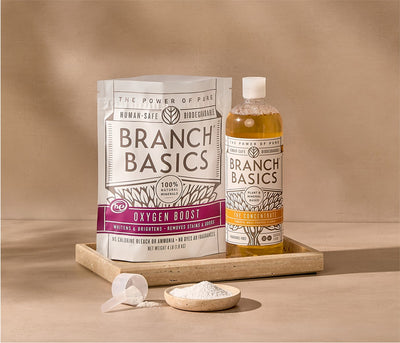
A powerful all-purpose cleaner that removes germs and cuts through dirt and grime is all you need to clean most surfaces. Branch Basics All-Purpose (found in any of our Starter Kits) can be used on just about any surface, and is a great first line of defense against minor mold or mildew.
To learn more about all the ways to use this multi-purpose product, check out our Complete Guide to Using Branch’s All-Purpose Cleaner
Improve air circulation
Open your windows and turn on fans to create a draft in your home. Try to leave the windows open for at least 10 minutes or more to improve air circulation. You can also run an air purifier near the source of the odor or use a box fan secured to a nearby window to expedite the process.
Choose natural odor neutralizers
Baking soda is a safe and natural odor neutralizer that can be used in a variety of ways to absorb and eliminate unpleasant smells. (Check out our Cleaning with Baking Soda Guide for tips.)
Vinegar is another natural odor neutralizer that you can use to clean appliances like your laundry machine; as a natural air freshener; or to eliminate cooking odors in your kitchen.
Taking these steps will help you create a truly clean environment rather than masking the source of odors with sprays, plug-ins, and other scented products.
Fragrance-Free Living: Rethinking What “Clean” Smells Like
The scent of rain or a freshly-peeled orange can bring us a moment of calm or reinvigorate our senses. But synthetic fragrance in household products can mask harmful chemicals that can hurt our health. We all want our homes to smell clean, but what does that really mean?
It doesn’t mean a fake “fresh” scent.
It means the absence of harmful chemicals and irritants.
It means truly clean rooms that aren’t masked with scented sprays.
It means the air you breathe is pure and healthy.
That’s where Branch Basics comes in. We are committed to being 100% fragrance-free, for good because we know the benefits of going fragrance-free firsthand.
We make our plant - and mineral-based products without hormone disruptors, parabens, phthalates, and other harmful chemicals. Because a truly clean home means clean air.
Ready to breathe a little easier? Get back to basics with us. Try one of our Starter Kits to save on everything you need for a clean, safe, home.