



Branch Basics Ingredient: Sodium Phytate

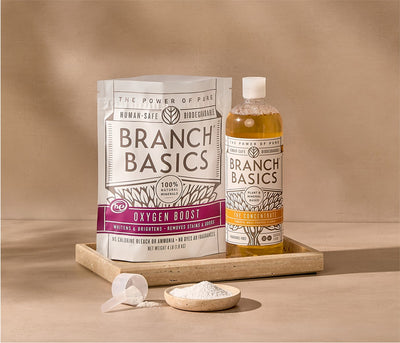
Sodium phytate is a natural, plant-based chelating agent used in Branch Basics Concentrate.
If the name sounds familiar, that’s because it’s also known as phytic acid, a naturally occurring anti-nutrient and antioxidant found in beans, grains, legumes, and other plant-based foods.
The only difference is that, although we recommend taking steps to reduce phytic acid in foods, we want it to remain active in Branch Basics products as a preservative enhancer, chelator, formula stabilizer, and GRAS food-grade ingredient.
The article explains the function of sodium phytate in Branch Basics Concentrate, including how it works, which ingredients it replaces, and why it meets our human-safe standards.
Key Takeaways
- Sodium phytate is a natural antioxidant, preservative enhancer, chelator, stabilizer, and water softener, and is found in Branch Basics Concentrate.
- It comes from plants, such as seeds, grains, and legumes
- It’s non-irritating, human-safe, biodegradable, pet-safe, baby-safe, safe for people with chemical sensitivities, and provides skin benefits
What Is Sodium Phytate?
Sodium phytate (aka: phytic acid) is a sodium salt and antioxidant that comes from phytic acid found in plants, such as grains and seeds.
In cleaning products, like Branch Basics Concentrate, it acts as a chelated agent, stabilizer, water softener, antioxidant, and preservative enhancer.
Phytic acid is 100% plant-derived, non-irritating, and considered non-toxic to humans and the environment, making it a perfect choice for Branch Basics products.
How Does Sodium Phytate Work in Branch Basics?
Although DIY cleaners don’t require them, all mass-produced cleaning products need some type of chelating agents, stabilizers, and preservative enhancers, especially if they’re water-based.
So, what is a chelating agent and how do they work in cleaning and laundry products?
Chelating agents help bind to metals in water and other ingredients, preventing them from interfering with a cleaning or laundry product’s formula and performance.
Just like certain herbs help chelate heavy metals from the body, sodium phytate helps neutralize them in Branch Basics Concentrate.
Now, why would we need a chelator if our Concentrate is made with Reverse Osmosis water, which should be as free of metals as possible?
Great question! We take heavy metal toxicity and contamination very seriously around here, which is why we use the RO water in our Concentrate.
To many, this may seem like overkill, but adding contaminated water to our meticulously-sourced human-safe formula would negate its human-safety.
The tricky part is that the Concentrate is designed to be diluted at home, and we can’t control what type of water our customers use. That’s where the sodium phytate comes in to neutralize the effects of heavy metals.
It’s also essential for maintaining a consistent viscosity and creating our self-preserving formula with no harmful preservatives.
Curious about heavy metals in water? Our good friend and water filtration expert Dr. Roy Speiser breaks it down in: Safer Water, Healthier Kids: What Every Parent Needs To Know.
Why Does Branch Basics Use Sodium Phytate?
We chose sodium phytate over other chelators because it’s plant-based, skin supporting, human-safe, biodegradable, widely available, sustainable, and can be used in small amounts to achieve the results we need.
As a cleaning formula that can also be used as a hand, face, and body wash, makup remover, and even baby shampoo, sodium phytate in Branch Basics helps moisturize, improves skin elasticity, normalize oily skin, may help reduce pore size, and help brighten the skin.
Sodium Phytate’s benefits are teamed up with the other skin-friendly ingredients like chamomile, and ECOCERT glucosides.
Sodium Phytate is rated a 1 on EWG Skin Deep.
It’s also effective and works beautifully within our self-preserving formula.
Learn more about how sodium phytate is used in household products in: What is Sodium Phytate? Safety, Use Cases, & More
What Harmful Ingredients Does Sodium Phytate Replace?
In a bulleted list, share the harmful ingredients that sodium phytate can replace. Reference commonly used toxic surfactants that are used in other cleaning products.
-
EDTA (ethylenediaminetetraacetic acid): A strong chemical binder and chelator that can persist in waterways and carry heavy metals into the environment. It can also cause kidney damage if ingested in large amounts.[1]
-
Phosphates: Such as sodium tripolyphosphate (STPP are commonly used to soften water and as a surfactant. Unfortunately, they also pollute waterways, trigger harmful algal blooms, and can cause a variety of health issues, including kidney, bone, cardiovascular, and endocrine problems, as well as skin and respiratory irritation.[2-5]
-
Phosphonates: These synthetic chelating agents don’t break down easily in the environment and have been linked to severe skin and eye burns and internal damage if ingested.[6]
-
NTA (nitrilotriacetic acid): A chelating chemical used in cleaning products, pesticides, personal care, and hair care products that may cause acute oral toxicity, severe damage to the eyes, and is a suspected carcinogen (cancer-causing ingredient).[7]
-
Synthetic polymers: Petroleum-based ingredients, like Polycarboxylates, break down slowly, contributing to microplastic and plasticizer chemical pollution in the environment and humans.
- Synthetic zeolites: These synthetic substances are man-made to mimic natural minerals that act like a sponge to absorb other minerals (a chelator). They are energy-intensive to produce, and can leave behind insoluble residues that are potentially toxic to the lungs and environment.[8][9]
- Citric acid: Although citric acid is naturally occurring in citrus fruits, most citric acid used in cleaning products is manufactured citric acid (MCA) and can be harsh on the skin and lungs, to the point of inducing asthma in some cases.[10][11]
Related reading: 7 Toxic Cleaning Products To Avoid & Safe Swaps
What’s Marilee’s Take on Sodium Phytate?
Our co-founder and human-safe ingredient expert, Marilee Nelson, shares her thoughts on sodium phytate:
“Finding a human-safe, plant- or mineral-based, and environmentally friendly chelator, stabilizer, and preservative enhancer is not easy! Which is why many well intentioned companies resort to using less than optimal ingredients, like citric acid or harmful preservatives.”
“Sodium phytate was an ingredient in this category that met our criterion, plus it offers skin care benefits, such as conditioning and hydration. For these reasons, it was the perfect addition to Branch Basics Concentrate.”
Learn more in: What Is Human Safe? Our Brand Promise
Sodium Phytate FAQs
Want to learn more about sodium phytate? Then let’s dive into some FAQs.
Q; Is Sodium Phytate Toxic?
A: No, sodium phytate is safe for humans, pets, the environment, babies, and the chronically ill, especially when used in small amounts, like in Branch Basics.
It’s rated on “1” (least toxic ingredient) on EWG SkinDeep and used in natural and low-tox skin care, hair care, oral care, and cleaning products as a safe alternative to synthetic chelators, stabilizers, and preservatives.[12]
Regarding natural phytic acid (sodium phytate) in foods, we recommend that those with digestive issues soak grains, legumes, and seeds to reduce phytic acid content.
Q: Is Sodium Phytate Natural?
A: Sodium phytate is considered natural because it’s derived from plants, such as grains, seeds, or legumes.
Q: How does Sodium Phytate support The Branch Basics Human Safe Standard?
A: Sodium phytate was chosen for Branch Basics Concentrate due to its low toxicity, biodegradability, and non-irritating properties.
It also passed our “canary in the coalmine” tests on volunteers with chemical sensitivities, making it an ideal ingredient for our human-safe cleaning line.
Q: What Are The Side Effects of Sodium Phytate?
A: Side effects of sodium phytate used in cleaning products are rare and minimal and may include skin irritation if used in large concentrations.
The amount used in Branch Basics Concentrate will not cause skin irritation, and our formula has been third-party verified not to be a skin or eye irritant. Testing with the chemically sensitive verified it is nota lung irritant.
Learn more in: End Product Testing: How Branch Basics Is Changing The Cleaning Industry
References:
-
https://www.ncbi.nlm.nih.gov/books/NBK565883/?report=printable
-
https://www.epa.gov/sites/default/files/2015-04/documents/edta.pdf
-
https://pmc.ncbi.nlm.nih.gov/articles/PMC3120105/
-
https://www.sciencedirect.com/science/article/pii/S0085253816301375
-
https://www.ewg.org/cleaners/substances/5653-SODIUMPHOSPHATE/
-
https://www.sciencedirect.com/topics/medicine-and-dentistry/phosphonate
-
https://pubchem.ncbi.nlm.nih.gov/compound/Nitrilotriacetic-acid#section=GHS-Classification
-
https://pmc.ncbi.nlm.nih.gov/articles/PMC8198335/
-
https://www.sciencedirect.com/science/chapter/bookseries/abs/pii/S1872085410040075
-
https://www.atsjournals.org/doi/full/10.1164/ajrccm.159.2.9804022
-
https://www.sciencedirect.com/science/article/pii/S2214750018300362?via%3Dihub%C2%A0
-
https://www.ewg.org/skindeep/ingredients/723889-SODIUM_PHYTATE/
Categories

Marilee Nelson
Marilee Nelson is an Environmental Toxins expert who has spent nearly 30 years advocating for the chemically-sensitive and chronically-ill. She is a Board Certified Nutritionist, Certified Bau-Biologist and Bau-Biology Inspector and specializes in Food As Medicine. She has helped thousands of families and individuals identify, heal and recover from toxic exposures and is on a mission to revolutionize the way American families view their health.


