



What is Residue from Cleaning Products? + Why It Matters for Your Health

Most of us consider something “clean” once we’ve applied a product and wiped or rinsed it off. But what happens when the product leaves something unwanted behind?
Let’s explore what causes cleaning product residue, how it can impact your health and home, and ways to avoid it.
What is Cleaning Product Residue?
Cleaning product residue is a trace amount of product that can be left behind on a surface after it's applied and wiped or washed away. It may be a thin layer of surfactants, films, or other ingredients that aren't fully removed when you clean your surfaces, dishes, or even clothing after a load of laundry.
With some products, you might be able to physically see or feel the residue left behind. But with others, it’s not so straightforward. For example, laundry products may leave behind small amounts of detergent, dyes, fragrances, or optical brighteners on fabrics and clothing. Dishes are another example: dishwashing products with added fragrance can leave a lingering scent. And some surface cleaners may leave films if not fully wiped away.
Not all residue is harmful. However, minimizing unnecessary build up—especially on commonly-used surfaces—can be a helpful part of a thoughtful, human-safe cleaning routine.
What Causes Cleaning Product Residue?
What goes into the product and how that product is used can both cause residue. Here's how:
Ingredient characteristics
Certain cleaning formulations are more likely to remain on surfaces if they’re not fully rinsed or wiped away.
For example: some surfactants and conditioning agents are designed to adhere to surfaces or fabrics. And certain disinfectants—particularly those containing quaternary ammonium compounds, as noted by The American Pharmaceutical Review—can leave residue if overapplied and not rinsed properly. With some products, fragrance may also linger intentionally to create a long-lasting scent that creates the perception of “clean” or “fresh." (However, these added fragrances don't actually matter in terms of efficacy.)
There's also been growing interest in understanding the environmental and health impacts of certain persistent chemicals, such as fluorinated compounds (PFAS). While PFAs aren't typically found in most cleaning products, they may be found in paints and coatings, hard surface cleaners, waxes and polishes for floors, aerosol-based air fresheners or cleaners, and some dishwashing rinse aids.
Reducing unnecessary chemical exposure whenever possible is always a good idea. Opting for EWG-Verified products and those made without harmful PFAs or other toxic chemicals is a great place to start.
Cleaning technique
Even well-formulated products can leave residue if they're not used properly. This can occur if the product isn’t thoroughly rinsed or wiped off or you use too much of a product. Cleaning technique is something that’s especially important to pay attention to if you’re using products with harsh chemicals. You don’t want those chemicals lingering in your home, on your surfaces, and in the air you breathe.
How Residue Can Affect Your Home and Your Health
As you can probably see by now, cleaning residue doesn’t just leave streaks or slippery films on surfaces—it can be absorbed by the body or inhaled through the air. And if the chemicals in your cleaning products aren’t human-safe, you’re increasing your exposure to harsh chemicals on a daily basis.
Surface buildup
Over time, residue can accumulate and lead to streaking or dullness on glass and countertops, sticky or slippery surfaces, and reduce the effectiveness of future cleaning.
Everyday contact
We all interact with cleaned surfaces multiple times per day, through our hands, clothing, and dishes. Whether it’s your little ones crawling on the floor and putting their hands in their mouths, eating off of dishes that may not have residue washed off, or throwing on a “clean” shirt that has a layer of chemical film or fragrance on it, these everyday exposures add up. Reducing unnecessary buildup and exposures can help support a cleaner and healthier environment at home.
Indoor air
Some cleaning products release volatile organic compounds (VOCs) during and after use, which can also impact your indoor air quality. A study from ACS ES&T Air shows that these compounds can negatively impact indoor air quality, particularly in enclosed or poorly ventilated spaces. Ensuring fresh air flow in the home can help freshen your home, especially after cleaning, and choosing products thoughtfully and using them as directed can help reduce unnecessary airborne exposure.
3 Ways to Reduce Residue in Your Cleaning Routine
Rest assured: a clean home doesn’t have to put your health at risk. Here are a few simple ways to make a meaningful difference in your cleaning routine:
-
Use products as directed. It sounds simple, but sometimes it’s easy to go overboard when applying a product—and in reality, excess product can increase the likelihood of residue without improving cleaning performance. Be sure to use only what is necessary for each cleaning job. Additionally, make sure you’re taking the time to properly rinse or wipe clean any sprayed surfaces or other areas, ensure proper rinse cycles for laundry and dishes, and pay attention to high-contact areas.
-
Choose thoughtfully-formulated cleaning products. Products made with well-understood, purpose-driven, and carefully chosen ingredients can help reduce the likelihood of unwanted residue. For example, surfactants such as decyl glucoside or coco glucoside are known for being mild and readily biodegradable, and are designed to rinse away easier when compared to other alternatives found in some cleaning products.
-
Avoid heavy fragrances, dyes, and unnecessary additives. These ingredients are often included for sensory appeal rather than cleaning performance. In some cases, they’re more likely to linger on surfaces or fabrics and may remain in the air after you’ve used the product. Skip the added scents and dyes and stick with the basics.
A Clean Home Without Compromise
A clean home isn’t just about what you remove—it’s also what you leave behind. We spend so much time in our homes that it’s easy to see how the products you clean with can impact your health long after the job is done.
By combining effective cleaning practices with thoughtfully formulated products, you can reduce unnecessary exposure to residue and harsh chemicals while still achieving the results you expect.
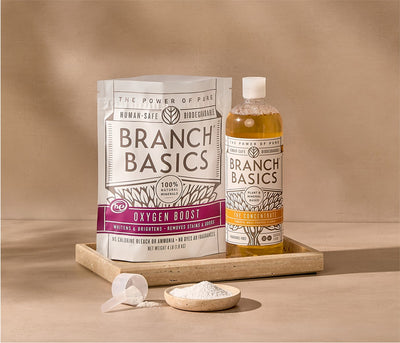
At Branch Basics, our cleaning solutions are designed with this in mind. Our plant - and mineral-based products are made to clean effectively without harsh chemicals or unwanted residue. For example, our Concentrate uses surfactants like decyl glucoside and coco glucoside, selected for their performance and rinseability. And each of our products has been intentionally made without the use of fragrance, dyes, or harsh chemicals typically found in conventional products—so you can enjoy a clean home without compromising your health.
If you’re looking to simplify your cleaning routine and be more mindful about residue, explore how Branch Basics offers a more intentional approach to cleaning.


