



Natural Remedies & Supplements For Perimenopause That Really Work

Are there solutions, natural remedies, and supplements that really work for perimenopause symptoms?
It’s a fair question given the HRT-enthusiasm dominating the conventional and integrative health space.
I can say with confidence, after eliminating Stage 4 Endometriosis by removing all processed foods with harmful chemicals, and eating a medicinal, multi-rich nutritional diet, later going through perimenopause and menopause without any symptoms, and guiding women in my consulting practice for over thirty-five years, that there is a solution to hormone disruption.
There are also remedies that can help speed recovery, alleviate symptoms, improve your health, and make the transition as a whole more empowering.
Here, we’ll share some of our favorite natural remedies for perimenopause symptoms like hot flashes, mood swings, brain fog, and PMS, plus the role endocrine-disrupting chemicals, in our diet and products we use, play in causing and exacerbating symptoms.
A Quick Overview of Perimenopause & Why It’s A Modern Problem
Menopause used to be the blanket term for the phase in a woman’s life when menstruation begins to cease and hormones wane.
However, the correct term for this transition phase is perimenopause.
Most women start noticing changes in their periods and other symptoms in their early to mid-forties, with periods ceasing altogether by their early to mid-fifties, or even late fifties.
If you have a chronic condition, such as autoimmunity, you may enter perimenopause as early as your mid- to late thirties.[1]
This transition phase can either be no big deal or life-changing, depending on the person, resulting in symptoms including:
- Hot flashes
- Moodiness
- PMS symptoms
- Heavy periods
- Irregular periods
- Night sweats
- Dizziness
- Thinning hair
- Heart palpitations
- Skin aging
- Sleep disturbances
- Lack of endurance
- Cognitive issues, like brain fog
- Loss of libido
- Less resilience
- Urinary symptoms
- Lowered immunity
- Painful intercourse
- Depression or anxiety
- Weight gain
- Vaginal changes
Given the vast array of potential symptoms, one can see why perimenopause is viewed as a problem to be fixed!
However, the interesting thing about perimenopause symptoms is that they appear to be a modern and Western Civilization problem.
For example, best-selling author and integrative menopause expert Dr. Christine Northrup notes in her book, “The Wisdom of Menopause,” that the Japanese have no word for hot flashes, and the I-Kung tribe of Africa has no word for menopause.
Sure, maybe our great grandmothers didn’t talk much about menstruation or menopause, but, as a grandmother, I can tell you that’s also because they didn’t struggle as much as women have since the 1950’s.
So, what’s changed? A lot, so let’s unpack this further.
Why Perimenopause Has Become So Hard
As discussed in Natural Remedies for Menopause, perimenopausal symptoms are often rooted in our Westernized lifestyle.
From ultra-processed foods to household chemicals, chronic stress to lack of nourishment and community, our culture taxes, drains, and dysregulates women to the point that when our hormones naturally start to diminish in perimenopause, we are tapped out and unequipped to adapt.
Chronic stress alone can have a devastating effect on hormonal function and resiliency via its impact on cortisol and the HPA (hypothalamic adrenal pituitary) Axis, which governs the hormonal system.
Elevated cortisol (the body’s master stress hormone) causes a downstream effect on reproductive hormones, like progesterone, while taxing the adrenals, which can, over time, result in HPA Axis dysfunction, also known as adrenal fatigue.
This is especially problematic as hormones start to shift during perimenopause, when healthy adrenals should kick in to provide extra hormonal support.
Then there’s the underappreciated role of endocrine/hormone disruptors, such as fragrance, phthalates, plastics, pesticides, herbicides, PFASs, VOCs, and SVOCs, which create chronic hormonal imbalances, making it seem impossible to attain hormonal harmony.
These, and other household, food, and environmental chemicals, continuously assault the liver, which must be in tip-top shape to process and conjugate hormones and other toxins throughout life, and especially during puberty and perimenopause.
The good news is that you can flip the script on these causal factors by tossing the toxins in your home and diet with our free online course, Toss the Toxins.
Laboratory testing has shown that many hormone-disrupting water-soluble chemicals, such as BPA and phthalates, are cleared from the body within 3 days when removed from the diet and from products used.
At the same time, you can upregulate your diet using natural remedies, such as herbs and supplements.
7 Natural Remedies & Supplements For Perimenopause
There are so many excellent natural remedies for perimenopausal symptoms, including supplements, dietary strategies, fitness, detox therapies, and others.
We wish we could list them all!
Today, we’ll focus on seven of our favorites for addressing some of the most common perimenopausal symptoms, including herbs, reducing exposure to endocrine-disrupting toxins, and using food as medicine.
1: Banish Endocrine-Disruptors From Your Home
All the perimenopause remedies in the world will be of limited value unless you get rid of pervasive hormone disruptors lurking in your diet and household products.
Our free Toss the Toxins Online Course is built on decades of experience helping clients transform their homes, and it walks you through a simple, step-by-step system to remove products with harmful ingredients efficiently and replace them with safer, hormone-friendly alternatives.
Also known as endocrine disruptors, or EDs, these synthetic chemicals have been shown in multiple studies to disrupt normal hormonal function, leading to various ill health effects, from cancer and hormonal imbalances to reproductive toxicity and perimenopause symptoms.[3-6]
The good news is that you can significantly reduce your exposure to endocrine disruptors by identifying and eliminating them in your home.
Examples of common endocrine disruptors include:
- Fragrances
- Plastics
- Bleach
- Ammonia
- PFAS (forever chemicals found in non-stick and water-repellant products, as well as toilet paper, facial tissue, and other paper products)
- Pesticides
- Herbicides
These endocrine-disruptors are pervasive in skin care, personal care, baby care, plastics, cleaning products, air fresheners, laundry products, food storage containers, and cookware.
The course covers these in detail and helps you zero in on efficient removal.
Also, check out How to Avoid Endocrine Disruptors in Your Daily Life for a quick primer.
2: Red Clover
Some of the most powerful herbs are often found on our lawns and ditches, and red clover is no exception.
This nutrient-dense herb has a rich history of traditional use for female complaints, immune and respiratory support, and as a nutritive tonic.
Modern research has shown that Red Clover contains isoflavones that mimic estradiol (estrogen), which can help alleviate hot flashes and other perimenopause symptoms.[2]
Red Clover tastes great in teas, and can also be found in capsules and tinctures.
3: Black Cohosh
Black Cohosh (Actaea racemosa) is one of the most beloved herbs for perimenopause and menopause, with a long history of traditional use in America, South America, Mexico, China, and parts of Europe for female reproductive health.
Various studies have shown Black Cohosh contains plant estrogens, known as phytoestrogens, offering a safe and natural solution for:[7][8]
- Hot flashes
- Night sweats
- Sleep disturbances
- Mood swings
- Bone health
It may be taken alone or in combination with other perimenopausal-supportive herbs, like Vitex, St. John’s Wort, and others.
4: Use Food As Medicine To Support Your Liver & Hormones
Perimenopause is often the wake-up call we need to make some changes to old dietary habits that may no longer serve us.
For example, many women find that they cannot tolerate refined sugar, gluten, dairy, alcohol, caffeine, or refined fats as they once did.
As annoying as it may be, this is a positive thing as it will motivate you to bring in more healing foods and toss the less healing foods.
During perimenopause, I recommend women focus on increasing the following foods:
-
Liver-supportive foods, such as artichokes, leafy greens, broccoli sprouts, microgreens, antioxidant-rich fruits like berries, green apples, cleansing radishes, and cruciferous vegetables
-
Carrots and other red, yellow, and orange root vegetables, like raw carrot salad, an old naturopathic remedy for promoting estrogen balance, and sweet potatoes or yams to help naturally support progesterone levels.
-
Dark leafy greens provide a natural source of the bone-building trio: calcium, magnesium, & vitamin K, plus liver-supportive nutrients
- Cucumbers and melons help flush the kidneys and provide natural bone-building silica and other minerals
-
Beans and legumes, like adzuki beans, black beans, and lentils, provide a gentle source of protein, soluble fiber, and other nutrients that feed the organs of elimination and help eliminate recycling hormones
-
Prebiotic-rich foods, like onions, leeks, and mushrooms, feed beneficial gut bacteria, which play a key role in estrogen metabolism, immune function, inflammation, and the estrabolome (a topic for another time!)
-
Fresh green juices to support the liver, adrenals, and detox pathways
-
Lemon water for a gentle daily liver tonic
-
Probiotic-rich foods like cultured vegetables, sauerkraut, and low-sugar kombucha can help promote a healthy gut microbiome
- Note that people with gut health issues, such as SIBO, may not tolerate cultured foods. Check with your healthcare practitioner for individual recommendations
- Note that people with gut health issues, such as SIBO, may not tolerate cultured foods. Check with your healthcare practitioner for individual recommendations
What about protein?
Many perimenopause and menopause experts are recommending high-protein diets to help with perimenopause symptoms, like weight gain, and to assist with muscle building.
This may work fine for some people, and getting enough protein is essential for good health!
However, what constitutes a “good amount of protein” is a topic of debate, with most traditional medicine systems suggesting far less than a high-protein diet requires. Centenarians, as well, generally eat less protein and meat than most Americans.
In my experience, the fastest resolution of hormone disruption occurs with a plant-based diet that eliminates animal protein and dairy.
Also, some individuals find high-protein diets taxing on the kidneys, digestion, and other organs of elimination, and may cause them to eat less of the healing foods listed above.
It is not my intention to dismiss this practice, as it may work for some, but rather to introduce an alternate viewpoint that more protein isn’t always beneficial for every perimenopausal person.
For more on upleveling your perimenopause nutrition, see: Natural Remedies for Menopause.
5: Maca Root
Maca Root originates from the Peruvian Andes, where it has been used for centuries as a functional food, adaptogen, hormone balancer, stress reliever, performance and energy enhancer, and fertility remedy.
Also known as Peruvian Ginseng, Maca was used by men and women for hormonal and reproductive support throughout life, including in perimenopause, menopause, and andropause.
Research has shown Maca may provide many benefits for perimenopausal symptoms, including supporting:[9][10]
- Libido
- Energy
- Mood
- Blood pressure
- A healthy stress response
Maca can be found in tinctures, pills, and powders and is a lovely addition to smoothies, energy balls, healthy desserts, and other healthful recipes.
Its adaptogenic (stress-relieving, resilience-enhancing) qualities make it a great herb to consider for long-term use during perimenopause, menopause, or any time you need some energetic hormonal support.
6. Vitex
Also known as Chastree and Agnus Castus, Vitex is a staple in herbal formulas for menstruation, PMS, irregular periods, cramps, and more.
It’s also been studied for its beneficial effects on various perimenopausal and menopausal symptoms, including hot flashes, night sweats, mood symptoms, breast tenderness, sleep, and overall quality of life.[11]
You can find Vitex as a single extract or with other complementary herbs, such as Black Cohosh, in perimenopausal/menopausal herbal formulas.
7. Shatavari
Shatavari (Asparagus racemosus) is a lesser-known herb in the West, but it is popular in Ayurveda (the traditional medicine of India) for supporting women during all phases of life, including perimenopause.
Considered an adaptogen (stress reliever), rejuvenator (rasayana), and a female tonic, Shatavari is often recommended for perimenopausal symptoms, such as hot flashes, mood swings, and low libido.
Studies also suggest it may help with these issues, as well as vaginal dryness, insomnia, anxiety, stress relief, and nervousness.[12][13]
As a bonus, it has a long history of use as a beauty aid for hair, skin, and nails.
You can find Shatavari from reputable Ayurvedic herbal supplement companies.
What About Soy For Perimenopause?
Soy has gotten a bad rap due to misinformation, confusion, and a lack of understanding of the benefits of traditional fermented soybean products vs. the highly inflammatory modern genetically modified (GMO) soybean products typically grown in the United States.
In this blog, we will only address organic fermented soy vs. GMO soy.
Many traditional cultures have no word for menopause or hot flashes. As diets and cultures become more Westernized, symptoms of hormone disruption begin to appear.
My eyes were first opened to this idea when my symptoms of hormone disruption (PMS, extreme breast pain, excruciating menstrual cramps, only alleviated by my mother’s narcotic cancer pain reliever, and Stage 4 endometriosis) were completely eliminated just by eating a medicinal plant-based organic diet that included fermented soy.
Then, repeatable resolution of endocrine disruption with my clients over the past forty years has been proof of the following concept: Organic fermented soy products such as miso, tempeh, natto, and tamari, combined with a plant-based medicinal diet, and tossing the toxins, are a powerful weapon against hormone disruption and the elimination of symptoms of perimenopause and menopause.
Thankfully, current studies are confirming the anti-inflammatory benefits of organic fermented soy, such as miso, tempeh, natto, and tamari, compared to the inflammatory effects of genetically modified soy.[14]
One glaring problem is that we now have herbicide(glyphosate)-tolerant GMO soy, which has led to the rise of herbicide-resistant superweeds.
These glyphosate-resistant weeds force farmers to spray even stronger, more dangerous pesticides on soybeans, which wreak havoc on the body, triggering gut-busting, inflammatory, and hormone-disrupting effects.[15]
To make matters worse, GMO soy hides in many processed foods as soybean oil, ground meals, protein isolates, soy-based meat substitutes, etc. Identification and removal of all GMO soy is imperative.
In summary
- Organic fermented soy contains a wealth of phytoestrogens that help balance hormones and alleviate perimenopausal and menopausal symptoms.[16][17]*
- Genetically modified (GMO) soy is inflammatory and problematic to everyone’s health.
+Note: Everyone is different, and organic fermented soy may be a problem for someone with histamine sensitivity or soy allergies. If you’re still concerned about consuming organic fermented soy, you can definitely improve and eliminate hormone disruption without including soy in your diet.
How Long Does It Take Natural Remedies To Work For Perimenopause?
Natural remedies typically don’t work as fast as pharmaceuticals, although some people notice an immediate difference.
Although everyone’s different, most people notice changes from taking herbs within a few days to a few weeks.
The exact timing depends on many factors, including the dose you’re taking, the quality and potency of the supplement, the severity of your symptoms, how consistently you’re taking your herbs, lifestyle factors, and your current state of health.
Regarding the removal of endocrine disruptors, many women notice an immediate difference in their periods, mood, and cognitive function—it can be that dramatic.
For others, it may take more time, but this all depends on how aggressively you remove these toxins from your home.
Using food as medicine can also yield quick results or take some time, depending on how many dietary changes you’re willing to make.
The really good news is that if you combine the right herbal protocol with the removal of endocrine disruptors and upleveling your diet, you can see changes very quickly.
Throw in some more movement, more sleep, and self-care, and you could feel like a whole new woman before you know it.
Working with a skilled integrative health practitioner, like a naturopath or herbalist, can be invaluable for dialing in a custom herbal protocol with optimal dosing and prioritizing lifestyle changes for faster results.
Ultimately, many factors can impact how quickly you’ll see results, so be patient with yourself and do what you can.
Are These Herbs Safe For Everyone?
Herbs are considered foods and have been used for thousands of years to support women through all stages of life.
However, a core principle in natural medicine and herbalism is that there is no one-size-fits-all approach.
For example, herbs and other supplements can interact with medications, including HRT, so be sure to check with your healthcare practitioner before taking new supplements.
Herbal supplements also vary significantly in quality, and choosing a clean brand that sources organic/wild-crafted ingredients and tests for identity and contaminants is essential!
We discuss some of our trusted supplement brands in: Your Quick Guide To Vetting Dietary Supplements.
How Branch Basics Can Help
What does a cleaning line have to do with perimenopause?
Well, for starters, all Branch Basics products are free from endocrine disruptors and other harsh chemicals. No compromises.
Our all-in-one, refillable, human-safe, plant- and mineral-based cleaning system also saves you time and money. Just one Concentrate plus water makes enough cleaning and laundry products to clean your entire home and replace all harsh cleaners.
Busy, health-conscious women and families love our all-in-one system because it’s fuss-free, works great, is safe for the whole family (including children, babies, pets, and the very sensitive), is MADE SAFE certified, rated A on EWG or EWG Verified, 100% biodegradable, plant- and mineral-based, naturally fragrance-free, and economical too.
We also offer lots of free educational support on how to toss the toxins, natural cleaning and laundry, as well as health and wellness topics, through our Blog, social channels, and free Toss The Toxins Online Course.
For new customers, we recommend:
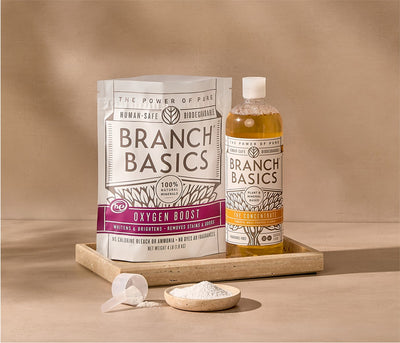
The Premium Starter Kit: Our original all-in-one kit comes with our signature Concentrate, refillable glass or plastic bottles, and Oxygen Boost
Or The Ultimate Starter Kit: Our newest all-in-one plus kit comes with our signature Concentrate, refillable glass or plastic bottles, and Oxygen Boost, as well as our water-free Laundry Detergent (so your Concentrate lasts longer), plus our plastic-free Dishwasher Tablets
For more natural remedy wisdom, check out the following articles:
-
7 Immune-Boosting Herbs & Spices In Your Pantry
-
How To Naturally Disinfect Surfaces
-
Transition to Non-Toxic Living: 8 Tips for a Healthier Home
-
7 Tips for Fast, Real-Food, Healthy Home Cooking
- Our 5 Favorite Herbs For Sleep
Note: The information provided in this article is based on the author's experience and is for educational purposes only. It is not meant to treat, diagnose, cure, or prevent any disease nor as a replacement for medical advice.
References:
-
https://pmc.ncbi.nlm.nih.gov/articles/PMC7961833/
-
https://pmc.ncbi.nlm.nih.gov/articles/PMC8069620/
-
https://www.niehs.nih.gov/health/topics/agents/endocrine
-
https://www.endocrine.org/-/media/endocrine/files/advocacy/edc-report2024finalcompressed.pdf?lctg=217279927
-
https://www.nejm.org/doi/full/10.1056/NEJMra2300476
-
https://pmc.ncbi.nlm.nih.gov/articles/PMC12066167/
-
https://pmc.ncbi.nlm.nih.gov/articles/PMC3046019/
-
https://link.springer.com/chapter/10.1007/978-3-030-64872-5_24
-
https://pubmed.ncbi.nlm.nih.gov/18784609/
-
https://pubmed.ncbi.nlm.nih.gov/24931003/
-
https://pmc.ncbi.nlm.nih.gov/articles/PMC6887765/
-
https://pubmed.ncbi.nlm.nih.gov/38725785/
-
https://pmc.ncbi.nlm.nih.gov/articles/PMC4027291/#b74
-
https://www.sciencedirect.com/science/article/abs/pii/S096399692100822X
-
https://www.nongmoproject.org/blog/the-gmo-high-risk-list-soybeans/
-
https://pmc.ncbi.nlm.nih.gov/articles/PMC12296567/
- https://www.pcrm.org/news/news-releases/study-shows-diet-causes-84-drop-troublesome-menopausal-symptoms-without-drugs
Categories

Marilee Nelson
Marilee Nelson is an Environmental Toxins expert who has spent nearly 30 years advocating for the chemically-sensitive and chronically-ill. She is a Board Certified Nutritionist, Certified Bau-Biologist and Bau-Biology Inspector and specializes in Food As Medicine. She has helped thousands of families and individuals identify, heal and recover from toxic exposures and is on a mission to revolutionize the way American families view their health.


