

How to Avoid Endocrine Disruptors in Your Daily Life

For many people, making healthy choices like eating organic fruits and veggies, staying active, and getting enough sleep all feel like they should earn you an A+ on your overall health. (And it's 100% true that those things are important!) But if you're not also paying attention to the chemicals in things like your laundry detergent, surface cleaners, and personal care products, you could be missing out on a critical link in your overall health.
That's because conventional personal care products and household cleaners typically contain Endocrine Disrupting Chemicals (EDCs)—even those labeled as "natural!"—which can wreak havoc on your hormones. These chemicals have been linked to a growing number of health concerns, from endometriosis to birth defects and cancer.
While this may seem daunting, we're going to provide you the info you need to avoid synthetic, hormone-hating chemicals—and opt for human-safe alternatives to your favorite products instead.
What Are Endocrine Disruptors?
Endocrine Disrupting Chemicals (EDCs) are environmental toxins that mimic your natural hormones, but without the benefits. In fact, they can affect your entire body—everything from your ovaries and adrenals to your thyroid and other glands, causing a myriad of potential health issues.
We are constantly exposed to these chemicals through products we use every day, from plastic packaging to personal care and cleaning products. Some of these chemicals are released into the air as volatile organic compounds (VOCs) or semi-volatile organic compounds (SVOCs), contributing to our ongoing exposure.
Semi-volatile compounds are particularly hazardous because they don’t chemically bind to the materials in which they’re used. This means they can continuously off-gas into the air and build up in the body.
Why Are Endocrine Disruptors Harmful?
Endocrine disruptors are dangerous because they interfere with our body's natural hormone system. By mimicking, blocking, altering our natural hormones, they disrupt essential biological processes like growth, metabolism, and reproduction.
This can lead to severe issues such as:
- Cancer
- Thyroid disease
- Metabolic disorders
- Birth defects
- Pre-term birth
- Endometriosis
- PMOS (PCOS)
- ADHD
- Infertility
Common Endocrine Disrupting Chemicals And Where They Are Found
Plastic
You may already know that the pervasiveness of plastics and microplastics in our everyday life has raised alarm bells in the scientific community. A primary reason for this is that many everyday plastics contain endocrine-disrupting chemicals such as Bisphenol A (BPA).
Plastic is often hidden in things you wouldn't even expect—it's lurking in everything from personal care products to receipts, food packaging, and workout clothes!
How to avoid plastic:
-
Store food in glass or stainless steel containers
-
Try not to touch paper receipts
-
Replace plastic cooking utensils with wood or stainless steel.
-
Choose wooden cutting boards instead of plastic.
-
Never microwave food in plastic containers.
-
Opt for natural-fiber clothing when possible.
-
Look for personal care and household products free from plastics and microplastics.
Note: Because of how ubiquitous it is in our society, reducing all plastic use doesn't have to happen overnight. Small, consistent changes can meaningfully reduce your overall exposure over time.
Phthalates
You might have heard of phthalates because they are typically found in synthetic fragrances. (According to an EWG study, 72% of products with the ingredient "fragrance" contained phthalates!)
They're also found in essential oils that have been processed through plastic tubing; air fresheners; scented trash bags, diapers, and candles; plug-in room fresheners; and many other personal care products.
How to avoid phthalates:
- Read labels—avoid products that list “phthalates” or “fragrance”
- Remove products with synthetic fragrance from your home—this includes personal care items like body wash, etc. (Here are our favorite non-toxic personal care brands.)
-
Avoid air fresheners or plug-in scents
- Use laundry detergent that doesn’t contain fragrance
Flame retardants
The annoying thing about flame retardants is that their presence is not limited to couch cushions or mattresses. They are used in pet beds, car seats, and even children's pajamas.
In fact, flame retardants are SVOCS that ride on the dust in our homes, meaning we breathe them and are continuously exposed all day long.
Our best weapon against flame retardants is removing the source—not buying them in the first place—however, regular HEPA vacuuming and dusting are also important to take care of flame retardants in products we haven't removed.
How to avoid flame retardants:
- Always check clothing labels. Stay away from synthetics in the kids' PJ section and opt for non-toxic clothing brands.
- Check furniture labels
- Choose a flame retardant-free mattress
- Choose a flame-retardant-free pet bed
- Use an air filter (e.g., HEPA) in your home
- HEPA Vacuum regularly—weekly if possible
- Open windows every day to circulate fresh air
Detoxing From Endocrine Disruptors
There are multiple approaches to balancing your hormones and restoring your endocrine system: eating organic foods whenever possible; supplementation when necessary; and of course, getting enough exercise and rest.
However, if you are doing all of that and not removing the harmful chemicals that may be present in everything from your laundry detergent to your tupperware, you may be spinning your wheels.
Toss the toxins for hormonal peace of mind
Removing endocrine-disrupting chemicals can feel daunting. But here are two encouraging things to note:
- Many endocrine-disrupting chemicals are rapidly metabolized and excreted by the body, meaning that you can make a few targeted changes and make a positive difference for your body. Research, including the Hermosa Study, substantiates how quickly exposure levels can decline when these products are removed—even within just a few days.
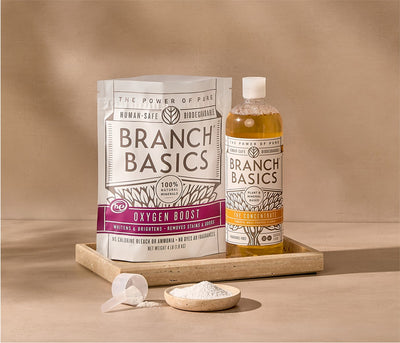
- Branch Basics was developed to help people remove harmful chemicals from their home and replace them with human-safe alternatives. Our line of plant- and mineral-based products is free of fragrance and other endocrine-disrupting chemicals while still being effective for whatever cleaning job comes up, whether it's a load of laundry, your surfaces and countertops, or a pile of dirty dishes.
We've also developed a stress-free, step-by-step approach for simplifying the removal of harmful chemicals from your home. Our Toss the Toxins Course doesn't cost money, doesn’t take much time, and has a proven track record of helping people improve their health.
Give it a try and experience the power of removing endocrine-disrupting chemicals for yourself. Your hormones—and your overall health—will thank you.
Categories

Marilee Nelson
Marilee Nelson is an Environmental Toxins expert who has spent nearly 30 years advocating for the chemically-sensitive and chronically-ill. She is a Board Certified Nutritionist, Certified Bau-Biologist and Bau-Biology Inspector and specializes in Food As Medicine. She has helped thousands of families and individuals identify, heal and recover from toxic exposures and is on a mission to revolutionize the way American families view their health.