



What is Sodium Percarbonate?

We take careful consideration of every ingredient in every formula, ensuring that everything we use passes our strict standards for human safety. Today we’re breaking down one of the key ingredients in several Branch Basics products, and what sets it apart from other cleaning ingredients.
Key Takeaways
-
Sodium percarbonate is made from two ingredients: sodium carbonate and hydrogen peroxide. Its antibacterial and deodorizing properties make it ideal for use in laundry and cleaning products.
-
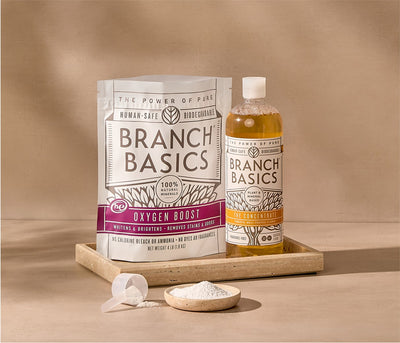
Branch Basics uses sodium percarbonate in our Oxygen Boost, Laundry Detergent, and Dishwasher Tablets because in addition to delivering a powerful clean, when used as directed, it’s also considered very safe for humans and the environment.
What Is Sodium Percarbonate?
Sodium percarbonate is a combination of hydrogen peroxide and sodium carbonate. Once it’s mixed with water, it separates into these two ingredients and gives off oxygen in the process. That reaction is what helps it lift stains and neutralize odors. It's especially useful if you want brighter whites but want to avoid harsh chemicals like bleach.
Sodium percarbonate also has antibacterial, antifungal, anti-algae, anti-mold, and deodorizing properties, making it an excellent ingredient in cleaning and laundry products. It’s considered safe for humans and the environment when used as directed.
What’s The Difference Between Sodium Carbonate vs Sodium Percarbonate?
Sodium carbonate is also called “washing soda,” and it can be derived from the mineral trona or synthetically produced from sodium chloride (table salt). It is non-toxic and acts as a water softener and cleaning agent in many detergents.
Sodium percarbonate is made by combining sodium carbonate with hydrogen peroxide.
Why Does Branch Basics Choose to Use Sodium Percarbonate?
Sodium percarbonate is highly effective at handling stubborn stains like coffee, red wine, or blood—yet it’s still safe for humans and the environment. Using this ingredient in our products means we can still deliver stain-fighting power and help you with those tougher cleaning jobs, whether it’s scrubbing stubborn grout from your tile or a tricky stain from a T-shirt, without the use of harsher chemicals like bleach.
How Does Sodium Percarbonate Work in Branch Basics?
Sodium percarbonate is activated by warm or hot water. When it hits the water, it releases trapped oxygen from the peroxide. This creates a bubbling effect that helps remove stains.
Sodium percarbonate in our Oxygen Boost is also activated this way. When you use sodium percarbonate in the laundry, the water releasing trapped oxygen from the peroxide creates a bubbling effect that lifts away stains, dirt, grime, and germs.
The Environmental Impact of Sodium Percarbonate
In addition to being human-safe, sodium percarbonate is also safe for the environment. When used as directed, it poses minimal risk to the environment and earth’s natural resources. Because it breaks down into water and oxygen, it doesn’t leave harmful residues behind for the planet.
What Harmful Ingredients Does Sodium Percarbonate Replace?
Sodium percarbonate is so versatile because it can replace many different chemicals typically found in conventional cleaning products—without the risk to human health. Here are some of the common, harsher ingredients that sodium percarbonate can replace:
-
Chlorine bleach: Also known as sodium hypochlorite, bleach may be a popular choice to reach for when wanting to whiten or brighten fabrics, but we recommend avoiding bleach whenever possible. Bleach is extremely toxic to humans, pets, wildlife, aquatic life, and the environment. It releases fumes that can irritate the lungs, eyes, and skin, as well as contribute to asthma, COPD, chronic respiratory problems, allergic reactions, and more. Sodium percarbonate can get the job done without posing risks.
-
Phosphates: These are frequently added to detergents as water softeners, but can pose health risks as well as harm aquatic wildlife. Sodium percarbonate is effective at softening water without being a harsh chemical.
-
Optical brighteners and dyes: These synthetic chemicals are designed to stick to fabrics and reflect light, making clothes appear “whiter.” However, there are a few issues with optical brighteners and dyes: they do not actually clean, are slow to biodegrade, and can irritate the skin.
Whether you want tough stain-fighting power, deodorizing, and whitening—or need an extra boost for a tough cleaning job, sodium percarbonate is effective without being harmful to human health.
An Environmental Toxins Expert’s Take on Sodium Percarbonate
As a materials specialist and environmental consultant who has spent over thirty years working with chemically sensitive and chronically ill people, I have seen how harmful ingredients in products affect our home’s air quality not only when we use them, but also when we store them under sinks and in cabinets.
Think about the cleaning aisle at the grocery store: those bottles aren't just closed; they're sealed, yet VOCs (volatile organic compounds) still escape into the air. The same thing happens throughout your home: products with harmful chemicals release VOCs 24/7. At night, when you're sleeping, your body has to use energy to detoxify these chemicals instead of resting, repairing, and restoring. This can hijack healing, limit your potential, and undermine your health.
Finding a safer substitute for chlorine bleach that doesn’t contain harmful VOCs or toxic chlorine by-products was a priority. I found, when recovering my son from what was considered irreversible brain and immune system injury, that he had extreme neurological reactions to chlorine bleach if a bottle even entered our home. This included blinding headaches and wide emotional swings, including anger, crying, depression, and agitation. I began to research whitening, brightening, and deodorizing laundry options that wouldn't trigger a reaction. Sodium percarbonate worked surprisingly well as a bleach replacement that he didn’t react to. Later in my consulting practice, just storing bleach in a home was a clear culprit for asthma, behavioral issues in children, depression, and brain fog.
Sodium percarbonate's safety depends on concentration and proper use. First, always store it out of reach of children. Like any powdered product, it can irritate the eyes, skin, and lungs if improperly handled. Care should be taken not to inhale the particulates from any powder when pouring or mixing. Because adding water to sodium percarbonate releases hydrogen peroxide, we recommend wearing gloves when using it in a strong solution to clean grout or sinks, as prolonged contact can irritate the skin.
Sodium percarbonate is a great chlorine bleach replacement that cleans, sanitizes, whitens, deodorizes, and removes stains without harsh chemical exposure.
Sodium Percarbonate FAQs
Is sodium percarbonate safe for kids?
Yes, sodium percarbonate is safe when used as directed and stored out of reach of children. Even though it is safe to use to clean your home, children shouldn’t handle sodium percarbonate.
Is sodium percarbonate natural?
Sodium percarbonate is not a naturally occurring element in and of itself; however, it is made from two naturally occurring elements: sodium carbonate and hydrogen peroxide.
How does sodium percarbonate support the Branch Basics “Human Safe” Standard?
We feel comfortable using sodium percarbonate because it is safe for human health when used as directed. As part of our high ingredient standards, we also look at what the Environmental Working Group (EWG) rates each ingredient. Sodium percarbonate has been rated “A” meaning it is considered safe for human use when used as directed.
Is sodium percarbonate the same as the "oxy" cleaners at the store?
No; sodium percarbonate is not the same as the “oxy” cleaners sold at the store. While traditional cleaning products may include sodium percarbonate in their ingredient list, many of them also add synthetic chemicals and other harmful ingredients.
Does sodium percarbonate expire?
Sodium percarbonate has a shelf life of 1-2 years when stored properly in a cool, dry place.
Can I mix it with vinegar?
No. Sodium percarbonate should not be used with vinegar, because it breaks down into hydrogen peroxide in water. Mixing hydrogen peroxide with vinegar creates peracetic acid, which can irritate your eyes, skin, or respiratory system.
Do I need to add Oxygen Boost to the Laundry Detergent?
It’s not necessary to tackle stains and odors—our Laundry Detergent can do that as it contains sodium percarbonate. However, if you have a difficult stain to treat like coffee or red wine, or simply want to brighten your whites, you can add Oxygen Boost to your load.
Toss the Toxins with Branch Basics
Using thoughtful ingredients that are safe for you and your family is at the heart of every product we make. Our line of human-safe cleaning products get the job done without compromising your health! Check out our starter kits here and save 10% by subscribing. Take our free online Toss the Toxins Course to learn more about the power of removal and how it can help you create a healthier home.
Want to learn more about our products and find our wellness articles faster? Add Branch Basics as a preferred source in Google search results.
Categories

Marilee Nelson
Marilee Nelson is an Environmental Toxins expert who has spent nearly 30 years advocating for the chemically-sensitive and chronically-ill. She is a Board Certified Nutritionist, Certified Bau-Biologist and Bau-Biology Inspector and specializes in Food As Medicine. She has helped thousands of families and individuals identify, heal and recover from toxic exposures and is on a mission to revolutionize the way American families view their health.