



How to Wash a Down Jacket Without Ruining It

If you've ever pulled a down jacket out of the dryer only to find a flat, lumpy shell, you're not alone. Understanding how to wash certain garments without ruining them isn’t always intuitive!
Here's the good news: your washing machine is rarely the problem. But what you wash with—and how patiently you dry the jacket—makes more of a difference than you might think.
Below, we'll walk you through a simple, step-by-step method for washing a down jacket, plus explore how Branch Basics can help you achieve a clean, residue-free wash.
Key Takeaways
-
Yes, you can wash your down jacket at home. Most down jackets can go in the washing machine on a gentle cycle with a small amount of mild, fragrance-free detergent.
-
It just takes a few simple steps. Pre-treat stains, turn inside out, put on a gentle cycle wash, then dry low and slow until the down is fully lofted again.
-
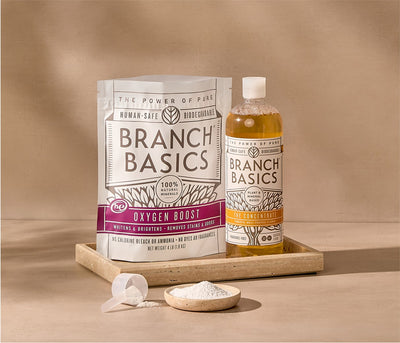
Residue-free is the goal. Branch Basics Laundry Solution (made with our Concentrate) paired with our Wool Dryer Balls clean and fluff the down without leaving behind residue that weighs it down.
How Often Should You Wash a Down Jacket?
For most people, washing a down jacket once or twice a year is plenty—ideally before you store it for the summer. Between washes, airing it out and spot cleaning go a long way.
But don’t wait too long: sweat, skin oils, and grime can make a down jacket flatter and less warm over time.
Here are some clues it’s time for a wash:
-
It looks flat or lumpy. If you squeeze your jacket, the baffles—which are the individual stitched compartments inside a down jacket—should spring back. If they don’t, or if it has a flat or lumpy appearance, oils and dirt are two likely culprits.
-
It smells off. A musty or sour smell that airing out won't fix likely means body oils and moisture have built up inside.
-
The collar and cuffs are grimy, or water stops beading. Visible buildup where the jacket touches skin, or rain that soaks in rather than rolling off, are both signs it’s time for wash.
The Best Detergent for Down Jackets—And Why it Matters More Than Your Machine
Down jackets keep you warm by trapping air. Each fluffy cluster lofts up and holds pockets of warmth, and anything that coats those clusters makes them heavier, flatter, and less insulating. That's why what you wash with matters so much. Plus, some conventional laundry detergents leave residue on fabric, which is the last thing you want—especially since a down jacket sits up against your neck and face all winter.
Here are laundry products that may be working against your down jacket:
-
Conventional liquid detergent: These often use more surfactants than one jacket needs, plus harsh chemicals and additives that can linger in the down if they aren't fully rinsed out.
-
Fabric softener: Works by coating fibers in a waxy film. On down, that film kills loft, which is the fluffiness and volume of the down clusters.
-
Optical brighteners: Chemicals that cling to fabric to make it look brighter. They don't actually contribute to cleaning a garment, and residue can stay behind.
-
Dyes and fragrance: These don’t contribute to cleaning power either—and fragrance is a common source of skin and respiratory irritation.
-
Enzymes: Enzymes are great for everyday laundry needs, but down is a protein, and enzymes are built to break down proteins. Save enzyme-based detergents for your regular laundry.
-
Powdered laundry detergent: We're normally big fans of powdered laundry detergent (we even made our own!) but when it comes to down jackets, powdered detergent is best avoided as in this case it may leave residue.
What to look for instead: A mild, fragrance-free liquid solution with no softeners, dyes, or optical brighteners, a short and fully disclosed ingredient list, and nothing designed to stay behind.
Related: The Toxic Chemicals in Dryer Sheets and Fabric Softeners
How to Wash a Down Jacket in 4 Steps
Now that you know what to avoid, it’s time to get down to the basics—pun intended. Here’s everything you need to know to wash your down jacket properly, without harsh chemicals.
What you'll need before you start:
-
Mild, fragrance-free detergent: Our Laundry Solution, made by diluting our Concentrate with water, is made with human-safe ingredients, no fragrance, dyes, or optical brighteners.
-
Wool dryer balls: Three Wool Dryer Balls tumble with the jacket to break up clumps and restore loft, no dryer sheets needed.
-
Time: One gentle wash cycle with an extra rinse, then up to three hours on low heat in the dryer, depending on the jacket's thickness. Air drying can take much longer, so plan for a full day.
-
Optional: Stain pre-treatment—our All-Purpose Cleaner, made by diluting the Concentrate with water, is perfect for everyday stains.
1. Prep the jacket
A few minutes of prep will help protect the shell, zippers, and baffles from snags during a wash cycle. First thing's first: start with the care label. Most down jackets say "machine washable, gentle cycle." If yours is worn off or missing, check the brand's website for your model, or follow the cold/gentle default in this guide.
-
Empty the pockets. Lip balm and tissues are the usual culprits.
-
Close zippers, snaps, and velcro. Open teeth and hook-and-loop tabs can snag the delicate shell fabric.
-
Remove any detachable hoods, trims, and liners. Faux fur trim in particular usually needs its own care.
-
Turn the jacket inside out. This protects the outer shell and any water-repellent finish.
-
Run an empty rinse cycle if needed. If your machine has old detergent or softener buildup, a quick empty rinse keeps that residue off your down.
2. Pre-treat any stains
When stains are handled up front, the wash itself can stay gentle, with cooler water and a softer cycle.
-
Spray Branch Basics All-Purpose Cleaner directly on the area and gently agitate
-
Leave on for 5-10 minutes before adding to wash.
*Tip: Spot test any coated or brightly-colored shell in a hidden area for compatibility with the All Purpose. See our Complete Stain-Master Guide for more stain-treating tips.
3. Wash on a gentle cycle
The goal is a thorough but gentle clean followed by plenty of rinse water to carry everything away.
-
Wash one jacket at a time. Down needs room to move and rinse. Two small items, like a jacket and a vest, are fine in a large front-loader.
-
Add a small amount of Branch Basics Laundry Solution. ½ capful of our Branch Basics Laundry Solution is adequate. Add it to the dispenser or directly to the drum.
-
Choose a gentle cycle, cold or low temperature, with an extra rinse. Opt for a cool wash with an extra rinse and a low spin. If your jacket comes out dripping, run one more low-speed spin to remove extra water before drying.
-
Don't panic if it looks flat at first! Wet down collapses into thin, clumpy layers at first. That's completely normal, and the dryer is where the loft comes back.
4. Dry the jacket low and slow
Patience is key: low heat and lots of tumbling are just what your jacket needs.
-
Tumble dry on low with wool dryer balls. Add three Wool Dryer Balls to keep the jacket moving and gently pummel clumps apart.
-
Pause to fluff by hand. Every 30 minutes or so, pull the jacket out, give it a good shake, and gently pull apart any clumps you feel through the baffles.
-
Keep going until it's fully dry. Thicker jackets can take up to three hours. Squeeze each baffle, especially the collar, cuffs, and hem. Any dense or cool spots mean there's still moisture inside, so keep drying.
-
No dryer? Air dry flat in a well-ventilated room. Lay the jacket on a dry towel, flip it regularly, and shake and fluff often to keep the down from drying in clumps. Expect it to take a day or more.
Whatever you do, skip high or concentrated heat (like from a hair dryer)—it can damage the shell fabric and cause the down to dry unevenly.
Down Jacket Washing FAQs
What temperature should I wash a down jacket?
Cold or cool water on a gentle cycle is best. Hot water can damage down and strip its natural oils. If the care label is missing, a safe default is a cool wash with an extra rinse and a low spin. Then dry on low heat.
What should I do if my jacket still has clumps in it?
This is almost always a sign of trapped moisture. Put it back in the dryer on low with your dryer balls and keep fluffing by hand until the clumps break up.
Do I need a special down wash?
Nope! What matters is that your cleaner is mild, fragrance-free, enzyme-free, and free of optical brighteners and softeners, and that you use only a little. Branch Basics Laundry Solution checks those boxes, letting you safely wash your jacket without residue left behind.
Should you dry clean a down jacket?
Most outdoor brands recommend washing at home instead. Dry-cleaning solvents can strip down of its natural oils, reduce loft, and leave chemical residue. However, if your care label specifically says dry clean only, you should follow it.
Avoid bringing dry-cleaned items into your home until they've aired out. Remove the garment from plastic wrap and air it out on a porch or well ventilated space until the dry-cleaning odor is gone. Read this great article for more tips: Is Dry Cleaning Bad for You? The Health Risks Explained - Biology Insights
Branch Basics for Down Jackets
Down asks for what we've always believed in: clean without the coating. Our Laundry Solution—sold as part of our Laundry Kit—is fragrance-free with no dyes or optical brighteners, and the ingredients are fully disclosed on the label. Made with our Concentrate and water, it’s third-party tested as safe for skin and eye irritation, works in standard and HE machines, and is effective in cold water.
Pair it with our 100% wool Wool Dryer Balls, and you've replaced dryer sheets too, giving you a simple way to wash your down jacket in a human-safe way!

Marilee Nelson
Marilee Nelson is an Environmental Toxins expert who has spent nearly 30 years advocating for the chemically-sensitive and chronically-ill. She is a Board Certified Nutritionist, Certified Bau-Biologist and Bau-Biology Inspector and specializes in Food As Medicine. She has helped thousands of families and individuals identify, heal and recover from toxic exposures and is on a mission to revolutionize the way American families view their health.

