



How To Use Vinegar For Laundry: Complete Guide

At Branch Basics, we’re big advocates of natural, human-safe cleaning products that actually work, and vinegar is at the top of our list.
It’s biodegradable, non-toxic, and incredibly versatile. It’s so powerful, it can be used to break down buildup, eliminate odor-causing bacteria, and freshen clothes at the source (and that’s just in the laundry room!).
In this article, you’ll learn all about how to use vinegar in the laundry room, including:
- What vinegar does for laundry
- What fabrics are vinegar-safe
- The type of vinegar that works best for laundry
- 5 ways to use vinegar for laundry
- The best laundry detergent to use with vinegar
Let’s dive in!
What Does Vinegar Do For Laundry?
Vinegar is a powerful natural laundry booster.
Here’s what it can do for your laundry:
- Stops bacteria growth in its tracks: Vinegar’s natural sanitizing properties target and eliminate odor-causing bacteria.
- Breaks down residue buildup: This includes sweat, lotions, sunscreens, detergents, and fabric softeners that get trapped in fabric fibers, making them feel stiff.
-
Naturally softens fabrics: It works as a gentle, natural detoxifier, leaving clothes feeling soft and comfortable.
-
Brightens whites: Vinegar is a natural bleach alternative and is especially useful on whites.
-
Targets and eliminates stains, odors, mold, and mildew.
- Cleans and descales washing machines: Without toxic bleach.
Is Vinegar Safe For All Types Of Fabrics?
Vinegar is safe for most fabrics, including cotton, microfiber, linen, polyester, wool, and nylon.
We don’t recommend using vinegar when washing delicate fabrics like silk, acetate, or rayon. The acetic acid in distilled white vinegar can break down and damage fabrics.
Also, use caution when washing elastic fabrics.
Vinegar can break down the elasticity, causing the stretch to deform. In other words, don’t use vinegar in a load of yoga pants and swimsuits.
Note: Always check for fabric compatibility and colorfastness in an inconspicuous area before washing with vinegar.
What Type Of Vinegar For Laundry Works Best?
There are several different types of vinegar available, including distilled white vinegar, apple cider vinegar (ACV), and cleaning vinegar.
Each has its own place when it comes to cleaning, but only one is best for use on laundry and in washing machines: distilled white vinegar.
Why Distilled White Vinegar Is Best For Use In Laundry:
-
Distilled white vinegar has a 6% concentration ideal for cleaning. It's stronger than ACV, but not as strong and overwhelming as cleaning vinegar.
-
It’s clear, unlike ACV, which has an amber color, so it won’t stain or discolor fabrics over time.
-
It has sanitizing properties, which help with controlling odor and stains.
-
Distilled white vinegar is less acidic than cleaning vinegar, making it a more gentle option for clothing.
-
White vinegar is one of the most versatile natural cleaning products! It descales, deodorizes, fights grease, removes stains, is an all-purpose cleaner, and is a natural fabric softener.
- It’s affordable and easy to find at your local grocery store.
Learn more in Cleaning Vinegar vs. White Vinegar: What’s The Difference? and Apple Cider Vinegar Versus White Vinegar: Which is Better for Cleaning?
Precautions When Using Vinegar For Laundry
Before using vinegar for laundry, there are a few precautions you need to know to keep you and your home safe.
#1: Don’t mix vinegar with bleach or ammonia.
Combining vinegar with bleach creates chlorine gas, which is highly toxic and harmful to the respiratory system.
Symptoms of exposure to chlorine gas include coughing, breathing issues, and burning in the eyes, nose, and throat.
We don’t recommend using ammonia in your home as it is (see why in What is Ammonia Used For & How to Avoid it | Branch Basics), but it’s especially important not to mix this chemical with vinegar. When combined, the two can trigger a chemical reaction that can irritate the skin.
#2: Use cleaning gloves.
Although vinegar is considered safe and non-toxic, it still contains acetic acid, which can be irritating to the skin.
For this reason, we recommend always wearing protective cleaning gloves.
A safety note about cleaning with vinegar: Although vinegar is safe and non-toxic, it is highly acidic and should be kept out of reach of children and pets.
If anyone in your home is sensitive to strong smells or has a respiratory issue, it’s best not to make vinegar or vinegar solutions airborne by spraying. Instead, try dabbing or wiping it on stains and odors, and ensure proper ventilation when you are cleaning.
Learn more about vinegar and its many uses in 12 Ways To Use Vinegar In Your Home.
5 Ways To Use Vinegar For Laundry
1. As A Natural Fabric Softener
Distilled white vinegar works as a natural fabric softener because it interacts with and breaks down detergent residue, which can build up over time, leaving fabric fibers feeling stiff.
To use, add ½ cup of vinegar to the rinse cycle to help soften fabrics.
Do not add vinegar during the wash cycle, as its acidity can interfere with the cleaning performance of laundry detergents when used together.
An added bonus: It also helps reduce static!
Looking for more natural fabric softener options? Check out 7 Legit Natural Fabric Softener Alternatives.
2. As A Bleach Alternative
Over time, detergent residue, hard water minerals, and fabric softener can build up on fabric fibers, causing clothing (especially whites) to look dull and gray.
To help prevent this, add 1 cup of distilled white vinegar to the rinse cycle as a bleach alternative.*
*Note: Never mix vinegar with bleach or add it to the bleach component of your washing machine. Doing so can create a highly toxic chemical called chlorine gas.
To learn more, check out Laundry Bleach Alternatives: 7 Human-Safe and Environmentally Safe Options.
3. As A Stain Remover
Laundry stains don’t stand a chance against the stain-lifting power of plain distilled white vinegar.
Vinegar’s natural acetic acid breaks down and removes many stains, including sweat, grass stains, blood, coffee, tea, oil, marker, chocolate, ketchup, and a whole lot more!*
To use:
- Blot up as much of the stain as possible with a dry or damp microfiber cloth. Gently scrape away any loose debris.
- Dip a clean cloth into a bowl of distilled white vinegar or dilute with water at a 1:1 ratio and dab directly on the stain.
- Gently agitate with a soft-bristled toothbrush or rub the fabric until the stain begins to lift or disappears.
- Rinse under cool running water. Repeat if necessary.
*Note: Before pre-treating a large stain, always test vinegar on an inconspicuous area for colorfastness.
Learn more in The Top 7+ Natural & Reliable Laundry Stain Removers.
4. To Deodorize Laundry & Kill Germs
Odors, especially those found on mildewed towels or sweaty gym clothes, have a way of lingering.
This is primarily due to the presence of odor-causing bacteria clinging to sweat stains, detergent buildup, and mold or mildew, for example.
Distilled white vinegar is a simple, natural, and very effective solution for killing bacteria, which then neutralizes and deodorizes odors.
There are three different ways you can use vinegar to deodorize laundry, including:
-
To Pre-Treat: Spray undiluted vinegar directly onto the odor and let it dwell for at least 15 minutes, then rinse and launder as usual.
-
As a Soak: Stubborn odors, like athletic gear or gym clothes, can be soaked in a basin of warm water and ½ to 1 cup of distilled white vinegar. Let soak for a few hours, then rinse and launder as usual.
- In the Washing Machine: Add ½ to 1 cup of undiluted vinegar to the rinse cycle and launder as usual.
For more natural deodorizing tips and tricks, check out How to Deodorize Clothes Using 5 Safe Solutions.
5. To Clean Your Washing Machine
It may seem counterintuitive, but it’s important to clean and detoxify your washing machine regularly to keep it in good working order and to prevent buildup on your laundry.
Vinegar can help!
How to clean your washing machine using vinegar.
For a top-loading washing machine:
- Fill the drum with hot water.
- Add one gallon of distilled white vinegar and run it for 10 minutes. Turn the washer off and let the solution stand overnight.
- In the morning, run your washer through a complete cycle.
- Open and wipe dry with a clean microfiber cloth.
For a front-loading (HE) washing machine:
- Run one gallon of distilled white vinegar through a hot water wash cycle.
- When complete, open and wipe dry with a clean microfiber cloth.
Read more in How To Naturally Clean And Detoxify Your Washer And Dryer | Branch Basics.
What’s The Best Laundry Detergent To Use With Vinegar?
When it comes to the best laundry detergent to use with vinegar, you’ll want to choose one that is natural, environmentally friendly, and made without the use of synthetic chemicals (which cause the unwanted buildup in fabric fibers).
For best results, pair vinegar with a human-safe, natural laundry detergent like Branch Basics Laundry Detergent, or check out Branch Basics Starter Kits, which include a refillable bottle (either plastic or glass) for making your own laundry soap with our all-in-one Concentrate.
Branch Basics Laundry Detergent is human-safe, fragrance-free, MADE SAFE Certified, EWG-Verified, and safe for sensitive skin.
It’s also safe for use in standard and HE washing machines and septic tanks.
Our formula is made with only plant- and mineral-based ingredients, so you can rest assured that there will never be any 1,4-dioxane, phosphates, sulfates, ethoxylates, optical brighteners, harmful preservatives, VOCs or SVOCs, bleach, ammonia, or dyes.
And don’t forget a set of Wool Dryer Balls. These dryer sheet alternatives reduce drying time, remove static, soften clothes, and can be used up to 1,000 times!
For more tips and natural advice on healthy, human-safe laundry and stain removal, check out our other articles:
-
What are Optical Brighteners in Laundry Detergent? How They Work & Why Avoid Them | Branch Basics
-
How To Clean White Shoes Naturally (No Bleach)
-
How to Clean White Clothes Without Bleach: 7 Natural & Effective Methods | Branch Basics
-
6 Safe Laundry Room Essentials: A Complete Checklist
-
7 Legit Natural Fabric Softener Alternatives
Vinegar For Laundry FAQs
Q: Can I Use Vinegar As A Detergent Substitute?
Absolutely!
You can combine vinegar, baking soda, or lemon juice for a natural DIY laundry detergent alternative that naturally sanitizes, removes stains, and softens fabrics.
To use:
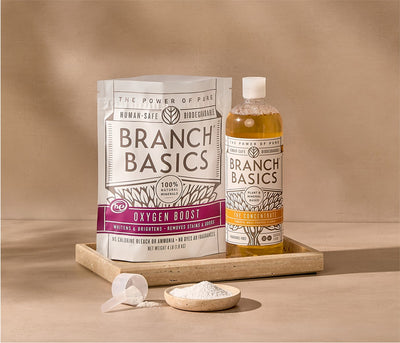
- Add ½ cup of distilled white vinegar or lemon juice to your washing machine and 1 cup of baking soda or Branch Basics Oxygen Boost.
- Add your laundry and run a full wash cycle.
For more, check out these 5 Best Laundry Detergent Alternatives Without Synthetic Chemicals.
Q: Where Do You Put Vinegar In An HE Washer?
You have two options: add the vinegar to the fabric softener dispenser or pour it directly into the drum during the rinse cycle.
Note: Do not add vinegar to the bleach compartment or mix it with detergent.
Q: Will My Clothes Smell Like Vinegar?
No, they shouldn’t. If you’re using a small amount, vinegar’s acidic smell should evaporate during the rinse and dry cycles.
If a smell does linger, it’s usually a sign that you’re using too much. To eliminate the smell, try rinsing again in fresh, warm water. If that doesn’t work, add a scoop of baking soda and rinse again.
Another important step is to ensure your laundry is completely dry. The dryer helps remove any remaining scent. You might also try sunning, one of our favorite and natural ways to remove unwanted odors.
Q: How Much Vinegar To Use For Odors?
In this case, less is more.
If you’re washing a stinky, mildewy load of towels or gym clothes, add ½ to 1 cup of distilled white vinegar to the fabric softener tray.
Adding too much vinegar can be harsh on delicate fabrics and may degrade the washing machine over time.
Q: Is Vinegar Safe For Baby Clothes?
For the most part, yes, but use caution or avoid use on delicate items.
Vinegar is great for pre-treating and removing baby stains (think diaper blowouts and spit-up!). But it’s best used diluted with water, or use a small amount in the fabric softener dispenser.
*Note: Vinegar should not be used as a baby detergent replacement! You should still use a baby-safe detergent, like Branch Basics Laundry or Branch Basics Laundry Detergent, for washing.
Q: Is Vinegar Safe For Pet Bedding & Sweaters?
Yes! Vinegar is safe to use around dogs, cats, and most other pets (use caution around birds, as it can be harmful).
Vinegar’s natural acetic acid breaks down dirt, grime, and pet hair, making it highly effective at cleaning pet bedding and sweaters.
Learn about more pet-safe cleaning products in Our Guide to Pet-Safe Cleaning Products.
Note: Although vinegar is non-toxic, safe, and natural to use on pet items, use caution when using undiluted vinegar around your pets.
The acetic acidic odor may cause irritation to the respiratory system, paws, and skin.
Avoid making vinegar airborne when pets are present, use proper ventilation, and ensure all pet bedding and sweaters are thoroughly cleaned and dry before use.
Categories

Marilee Nelson
Marilee Nelson is an Environmental Toxins expert who has spent nearly 30 years advocating for the chemically-sensitive and chronically-ill. She is a Board Certified Nutritionist, Certified Bau-Biologist and Bau-Biology Inspector and specializes in Food As Medicine. She has helped thousands of families and individuals identify, heal and recover from toxic exposures and is on a mission to revolutionize the way American families view their health.


